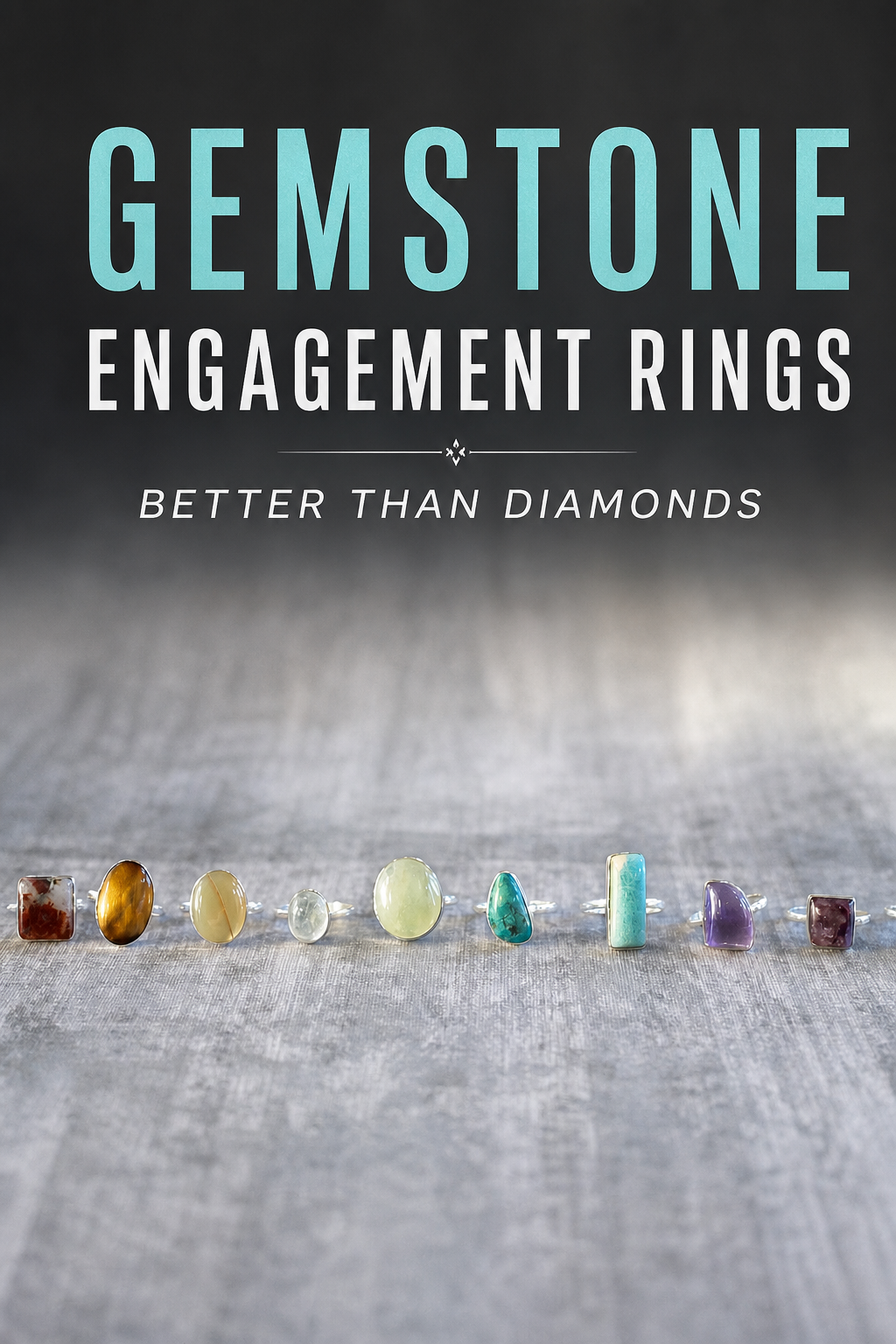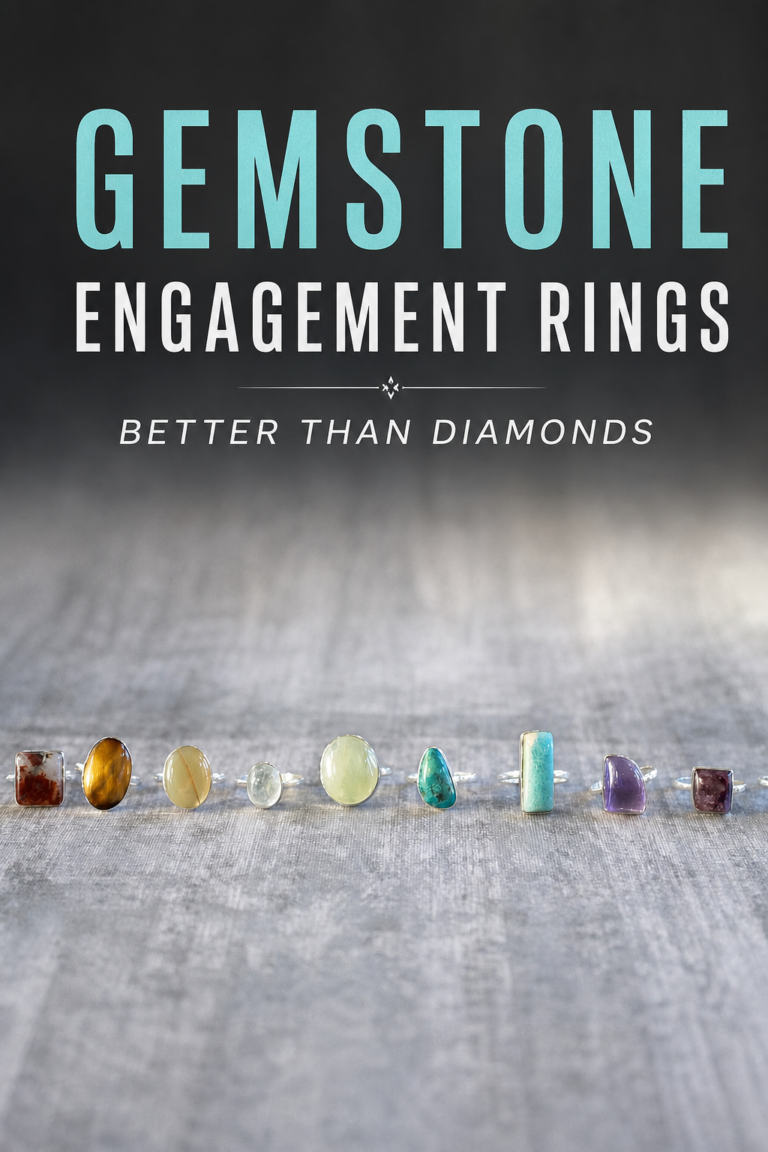
My parents would inevitably go on a trip and bring me home an aquamarine (birthstone) or something else unique that they found on their travels. As time went on, I found myself with a whole stack of gems: rose quarts, turquoise, amethysts, and garnets to name a few.
Not really knowing what to do with them, I kept them safe anyways in a compartment organizer box that I would take out now and again to look at. But, to be honest (sorry mom and dad), I never really appreciated them or cared to find out their origin or additional information.
I was lead to believe that every girl wants a big rock on her finger, but not a gemstone. And yet, up until recently I still thought of gemstones as almost fake rocks that mustn’t be worth much.
Has my opinion ever changed! 🙂
While on a recent trip to Budapest, our limited selection of English language TV channels meant we didn’t have much to choose from for evening entertainment. One night we stumbled upon a show called Prospectors, which follows a group of miners as they try to strike it rich by searching for the rarest gems in select parts of Australia and the US.
To be honest, the show is completely scripted junk TV. However, I will admit that it is slightly addictive. The only true educational part about it was learning how the modern day prospectors actually find gemstones.
I can now say I have a huge appreciation for gems – how they are found as well as how they are formed. I love the fact that real gems, with all their intense coloring, are naturally formed in the earth.
Hence why this article on gemstone engagement rings is now in front of you!
What are Gemstones?
“A gemstone (also called a gem, fine gem, jewel, precious stone or semi-precious stone) is a piece of mineral crystal which, in cut and polished form, is used to make jewelry or other adornments. However, certain rocks (such as lapis lazuli) or organic materials that are not minerals (such as pearl) are also used for jewelry. Therefore they are often considered to be gemstones as well.
Most gemstones are hard, but some soft minerals are used in jewelry because of their luster or other physical properties that have aesthetic value. Rarity is another characteristic that lends value to a gemstone. Apart from jewelry, from earliest antiquity engraved gems and hardstone carvings, such as cups, were major luxury art forms.”
Source: Wikipedia
How Much Do Gemstone Engagement Rings Cost?
To find the right price for your dream ring, the best advice is to shop around. And when it comes to gemstones, the variety of value definitely increases.
Depending on the type of gemstone you’re looking for, expect a wide range of prices. Typically, rare or larger stones are pricier. This means you could pay anywhere from $100 to $10,000 for your gemstone engagement ring.

More pricey gemstones include the more popular stones like high-quality diamonds, rubies, and emeralds. Cheaper and easier to find gemstones are often those listed as common birthstones, since these are already readily available as rings and mass-produced. Birthstone gemstones include varieties such as peridot, garnets, and alexandrite.
Quick History of Gemstone Engagement Rings
The Archduke Maximillian of Austria gave the first diamond engagement ring on record in 1477. He had the ring commissioned for his betrothed, Mary of Burgundy.
During the 1930’s, exploitation of African diamond mines flooded the gemstone market with diamonds. In response, jewelers designed an ad campaign to sell diamond engagement rings as the height of wedding couture. The marketing was one of the most effective campaigns in history, and couples began buying diamond engagement rings almost exclusively.

Up until that time, engagement rings came in a variety of different gemstones.
Most Popular Gemstones
While diamonds are still the most widely popular gemstone in jewelry, many other types of gemstones are used. Sapphires are among the most popular stones, and are often used as a common alternative to diamonds.
Rubies are valued as an accent stone, while purple amethyst have been used since ancient times for fine jewelry. Jade has dominated the Asian gemstone market, and onyx has become popular among those valuing a dark, unique statement piece.
Largest Gemstone on Record
The largest cut and faceted gemstone in the world is the Golden Jubilee Diamond, weighing in at 545.67 carats, or 109.13 grams. The diamond was discovered in the Premier Mine in South Africa in 1985, where the last largest diamond, the Great Star of Africa, was discovered.
Unique Gemstone Engagement Rings
First up: gemstone rings we spotted on real L&L weddings, from electric blue sapphires to deep green emeralds and a ruby-red cluster or two. Click any ring’s link to see the full wedding. Scroll further for shoppable options.
Emerald-Cut Emerald with a Diamond Halo
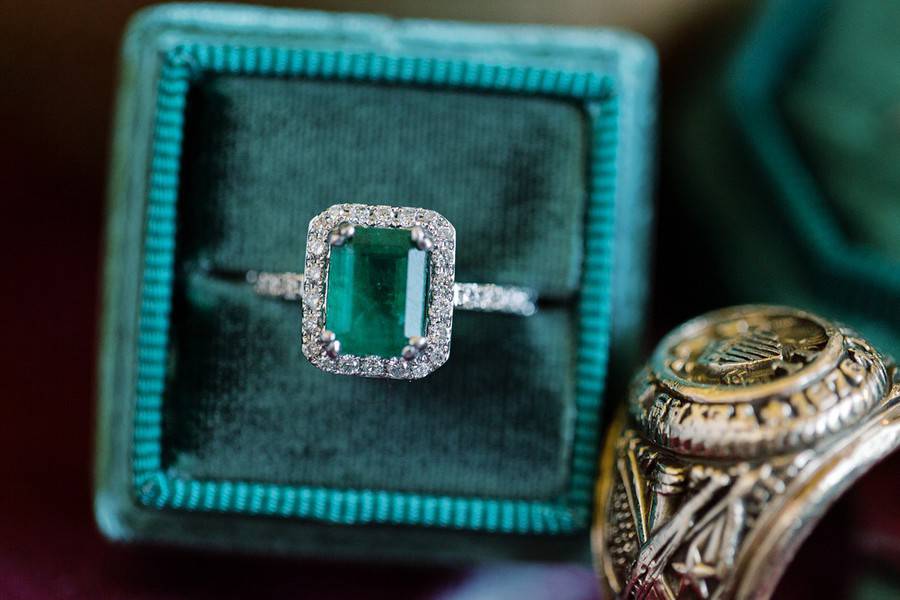
If you’re going to do a green stone, do it like this. The emerald-cut center is deep and saturated, the diamond halo gives it that extra flash, and the pavé band keeps the whole thing from reading too heavy.
It’s nestled in a teal velvet box that practically matches the stone, which is the kind of detail we notice. (For a Lord of the Rings wedding, of course this was the one ring.)
See Nicole and Andrew’s Lord of the Rings Wedding →
Round Sapphire in a Filigree Setting
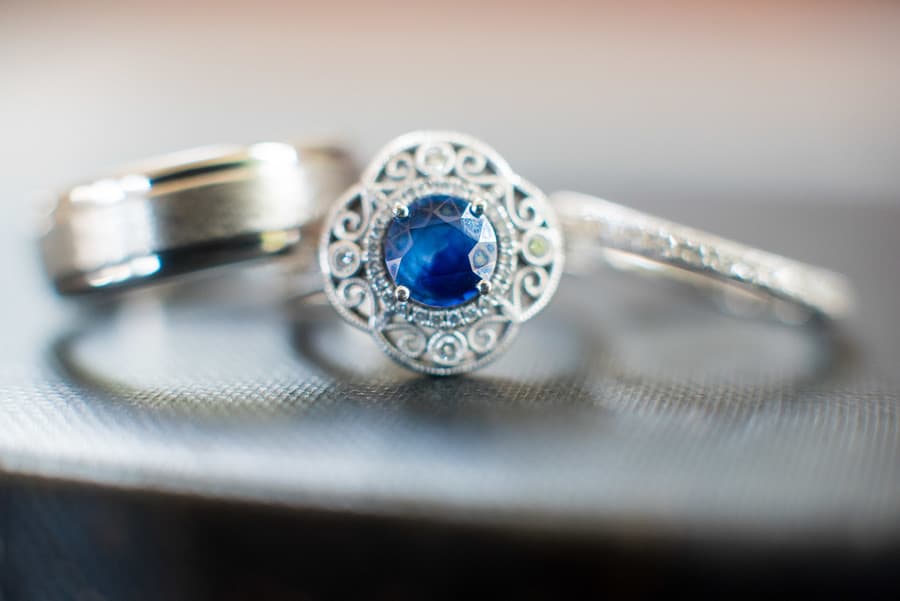
The scrollwork is what gets us here. A round royal-blue sapphire sits inside an openwork filigree halo with milgrain edges, the kind of vintage detailing that makes a modern solitaire look a little plain.
Photographed next to the wedding bands, the blue reads almost electric. A great pick if you want a sapphire that still feels like an heirloom.
See Heidi and Bill’s Old Town Hall Library Wedding →
Ruby-Red Cluster in a Floral Setting
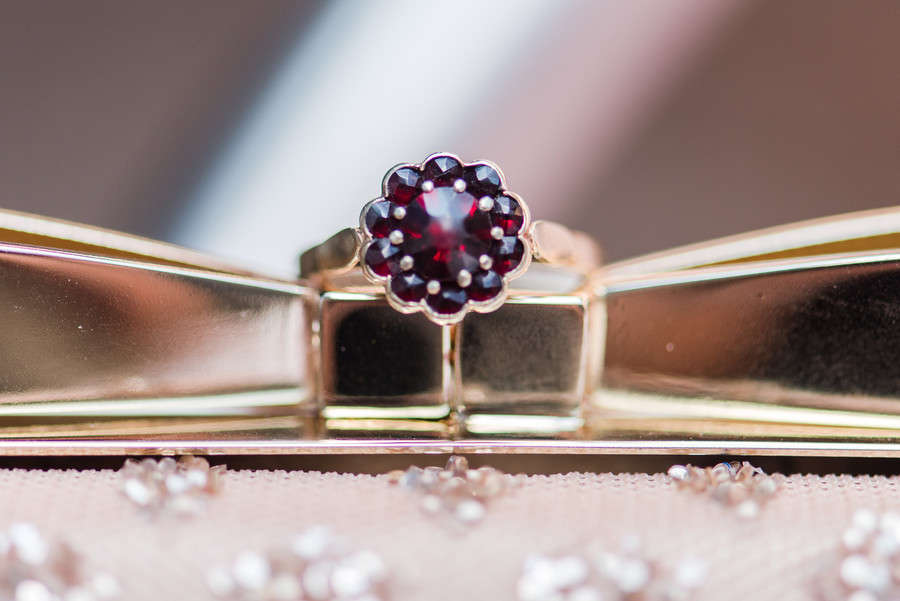
Proof that not every colored stone has to be blue. This one’s a flower-shaped cluster of deep red gemstones set in warm gold, with a scalloped edge that leans vintage.
It was photographed perched on a gold clutch, a styling move we fully endorse. The red-on-gold combination feels rich without trying too hard.
See Ashley and Brian’s Cityscape Winery Wedding →
Art Deco Diamond and Sapphire Flower
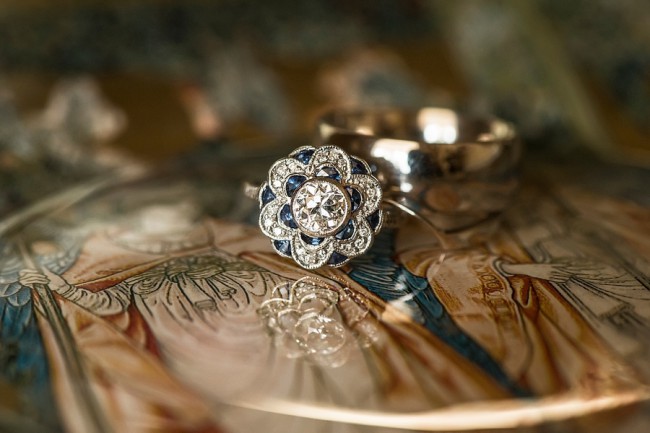
A central round diamond, a scalloped halo of smaller diamonds, and little blue sapphires tucked between the petals. The whole face is shaped like a flower and reads pure Art Deco.
If you love the look of a colored stone but don’t want to give up diamond sparkle, this is the compromise that doesn’t feel like one.
See Frances Marie and Nick’s Pensacola Yacht Club Wedding →
Round Sapphire Solitaire in Gold

Sometimes simple wins. A single round sapphire, deep blue, held up in a six-prong gold setting. No halo, no fuss, just the stone.
Whoever styled this shot dropped it onto a bed of purple daisies, and the blue-against-violet thing works far better than it has any right to.
See Jess and Corey’s Tent Wedding →
Dark Gemstone Solitaire on a Thin Band

A small, dark gemstone on a delicate gold band, photographed on the hand instead of staged on a flower. We love seeing how a ring actually sits.
Paired with the groom’s matte black band, it reads modern and pared-back, exactly right for two people who got married hiking in Grand Teton.
See Amanda and Ashton’s Grand Teton Elopement →
Green Emerald Halo on the Hand
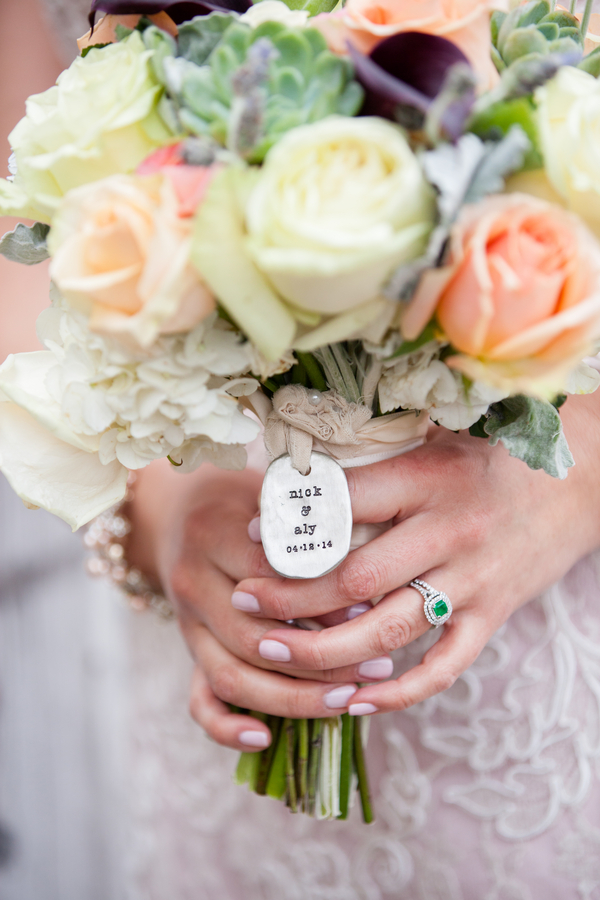
Another green stone, this time caught in the wild: a haloed emerald on the bride’s hand while she holds a peach-and-cream bouquet tagged with the couple’s names and date.
It’s a reminder that the ring doesn’t have to be the only thing in the frame to steal it. The green against all those soft peach blooms does the work.
See Aly and Nick’s Farmers Market Wedding →
Baguette Bicolor Watermelon Tourmaline Diamond Ring
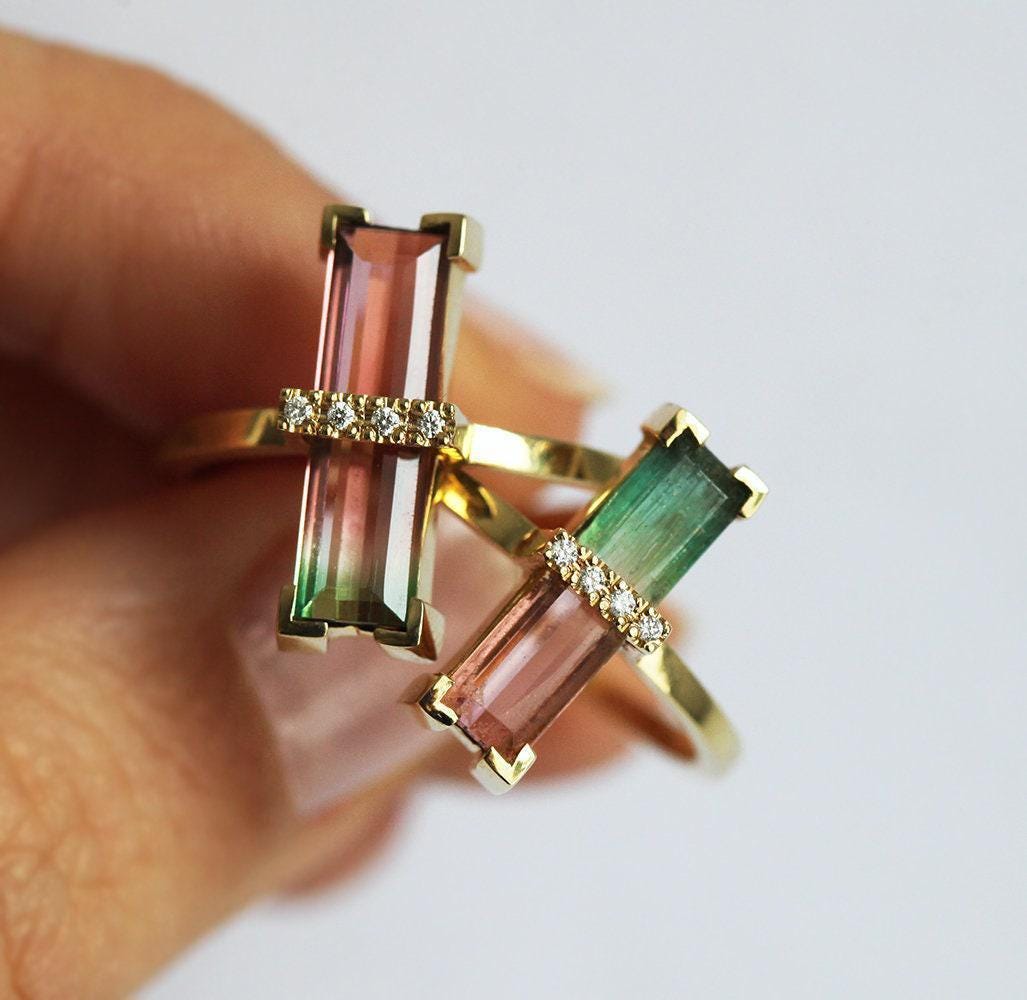
Bicolor watermelon tourmaline in a baguette cut, set as the centerpiece of a ring that has absolutely no interest in blending in. The stone itself does the heavy lifting here: that signature gradient from pink core to green rim looks like the fruit it’s named after, except considerably harder to ignore at a dinner table. Summer in mineral form, basically.
Diamonds are present, but they know their place. They frame the tourmaline without competing with it, which is exactly the right call when your main stone already has this much going on. The cut keeps the color front and center, and the overall composition reads as considered rather than accidental.
This is the ring for someone who looked at a solitaire diamond and felt nothing. Watermelon tourmaline is genuinely rare, the bicolor effect even more so, and a baguette cut is an unusual choice that pays off by letting the natural color zoning speak clearly. Wear it on its own or stack it, either way it holds its own.
Hand Forged Montana Sapphire Ring
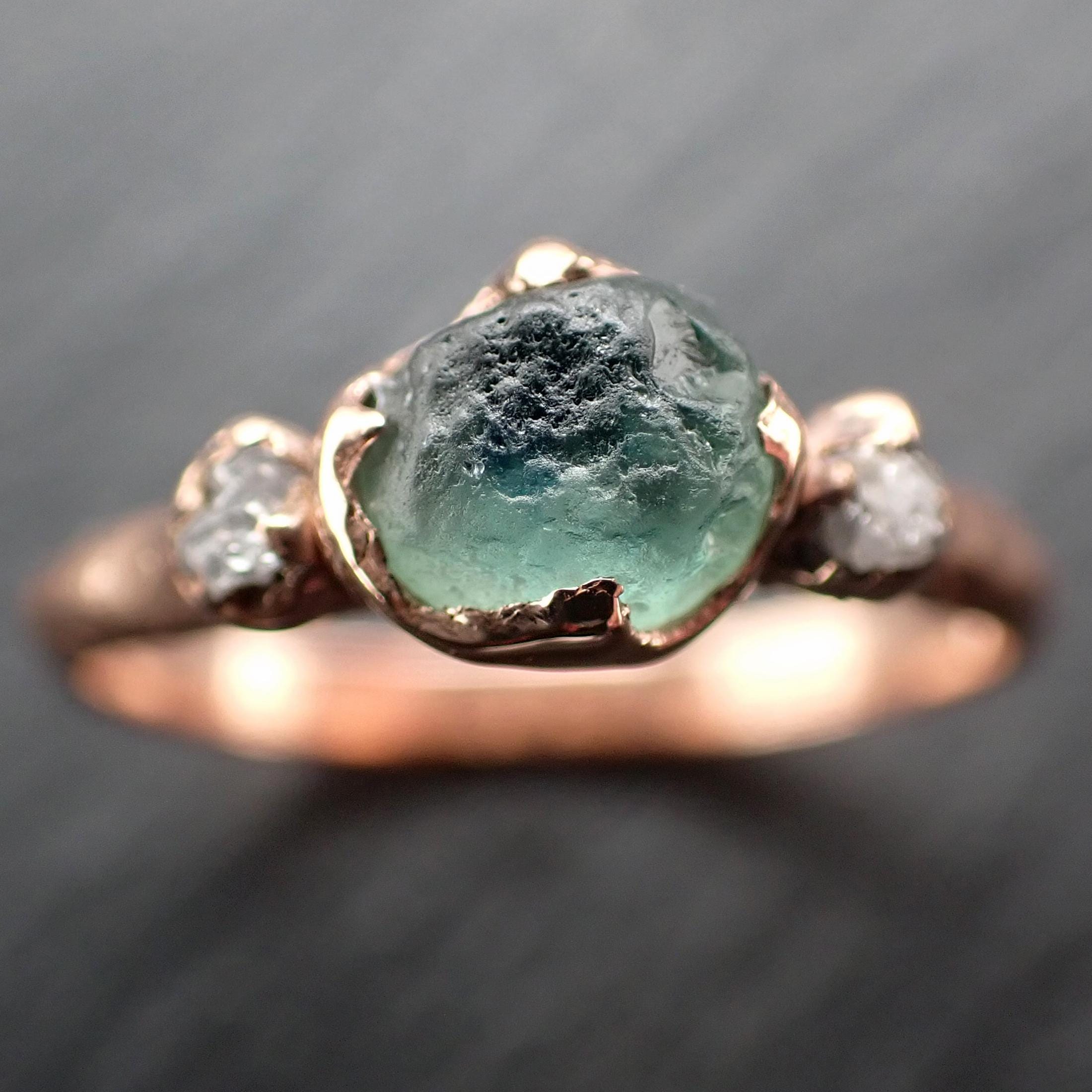
A hand-forged ring set with an unpolished Montana sapphire, raw and straight from the Treasure State. The stone skips the polish treatment entirely, so what you get is the gem as geology made it: rough edges, honest color, and none of the showroom gloss that makes every other ring look the same. Big Sky Country on your finger, basically.
Sapphires have been upstaging diamonds at engagements for centuries, and this one earns its place in that tradition. The unpolished cut brings out a color depth that a faceted stone would actually lose, and the hand-forged setting keeps the whole thing feeling like a one-off rather than a catalog pull. It is sustainably sourced, too, so the provenance is as clean as the design.
If the person you are buying for has strong opinions about everything and would quietly judge a solitaire diamond, this is the ring. It reads as considered, a little unconventional, and genuinely interesting. Exactly the qualities you want in something they will wear every day for the rest of their life.
Heirloom Turquoise Halo Ring
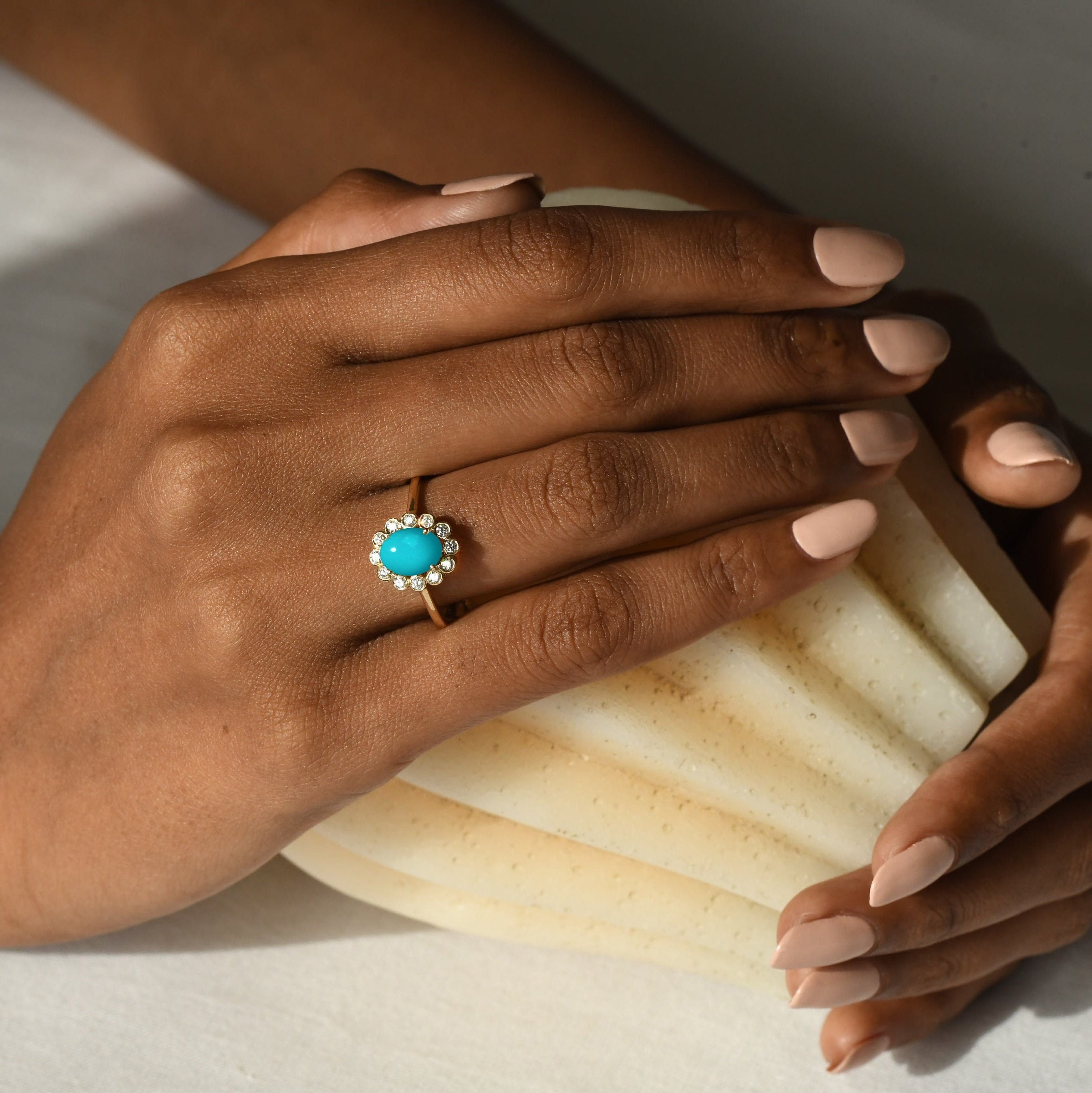
The Heirloom Turquoise Halo Ring puts a turquoise stone center stage, set in 14K yellow gold in a halo configuration that reads as genuinely singular rather than just trying to be. It has the kind of presence that makes people ask where you got it, which is exactly the point.
Turquoise has a longer track record than most gemstones people consider “classic,” worn by free spirits and style obsessives long before the diamond solitaire became the default. This ring leans into that history without apologizing for it. The yellow gold setting keeps it warm and grounded rather than costume-y.
If your jewelry drawer is already full of safe choices, this is the piece that disrupts the lineup. It works as an everyday ring for someone with a strong personal style, or as a statement piece that does the talking when you’d rather not. Bold without being loud, specific without being fussy.
Minimalist Oval Citrine Ring
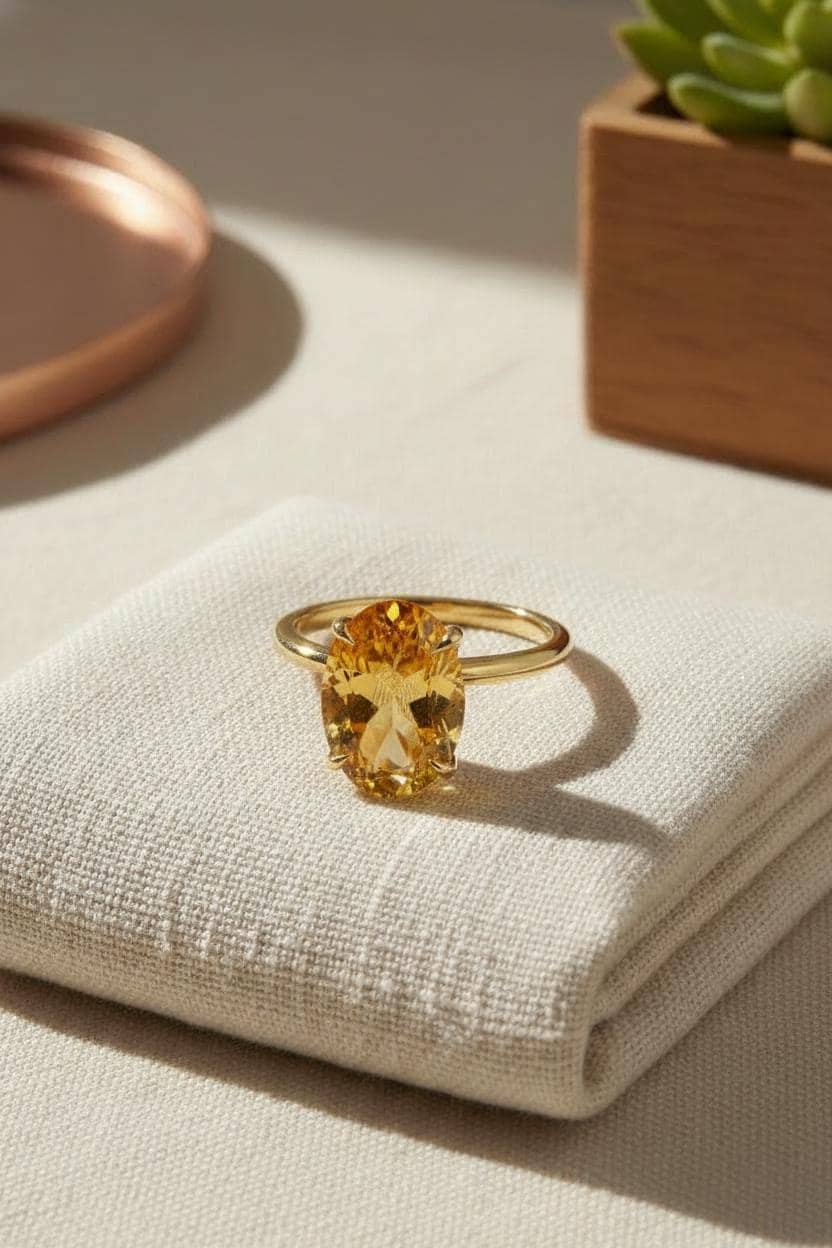
The oval citrine sitting at the center of this minimalist ring catches light like a drop of condensed golden sun. The band is sleek and unadorned by design, the kind of piece that reads as effortlessly put-together without announcing itself across the room. For anyone tired of the usual bling circus, this is the antidote.
Citrine has a long reputation for carrying joyful energy, believed to bring wonder and delight to whoever wears it. Wrapped around your finger in this clean, elegant setting, that feels entirely plausible. Sometimes a single well-chosen stone does more than a handful of competing ones ever could.
This works as a self-treat or as an engagement ring with a genuinely unexpected twist. It suits the person who gravitates toward the refined rather than the ostentatious, who would rather be interesting than predictable. The citrine does the talking; the band knows to stay quiet.
Oval Opal Twist Ring
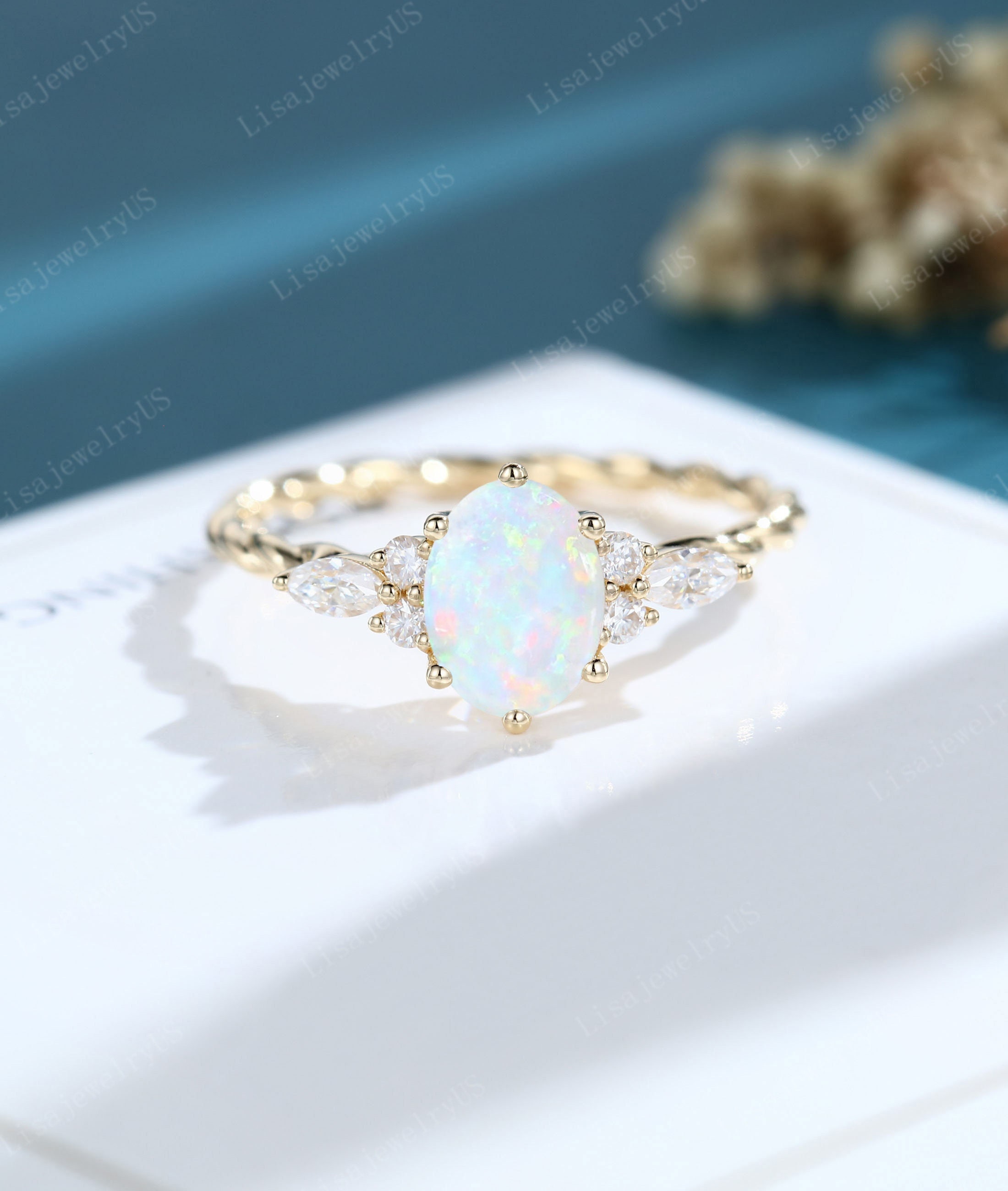
The Oval Opal Twist Ring puts a natural opal at center stage, set in 14K gold, and the stone does what opals do best: shift through greens, blues, and oranges depending on how the light hits it. No two moments look the same. The band itself has a twisted design that gives the whole piece a sculptural quality without going overboard.
That twist is doing real work here. It keeps the ring from reading as a straight solitaire while still letting the opal own the spotlight. The result is something that sits quietly on the hand but gets noticed anyway, which is a harder balance to pull off than it sounds.
This works well as an engagement ring for someone who finds the standard round-diamond-on-a-plain-band setup a little predictable, and it holds its own as a standalone piece in a personal collection. The opal’s color play means it photographs differently every time, which is either a bonus or a mild obsession waiting to happen.
Vintage Gemstone Engagement Rings
14K Floral Ruby Cluster Ring
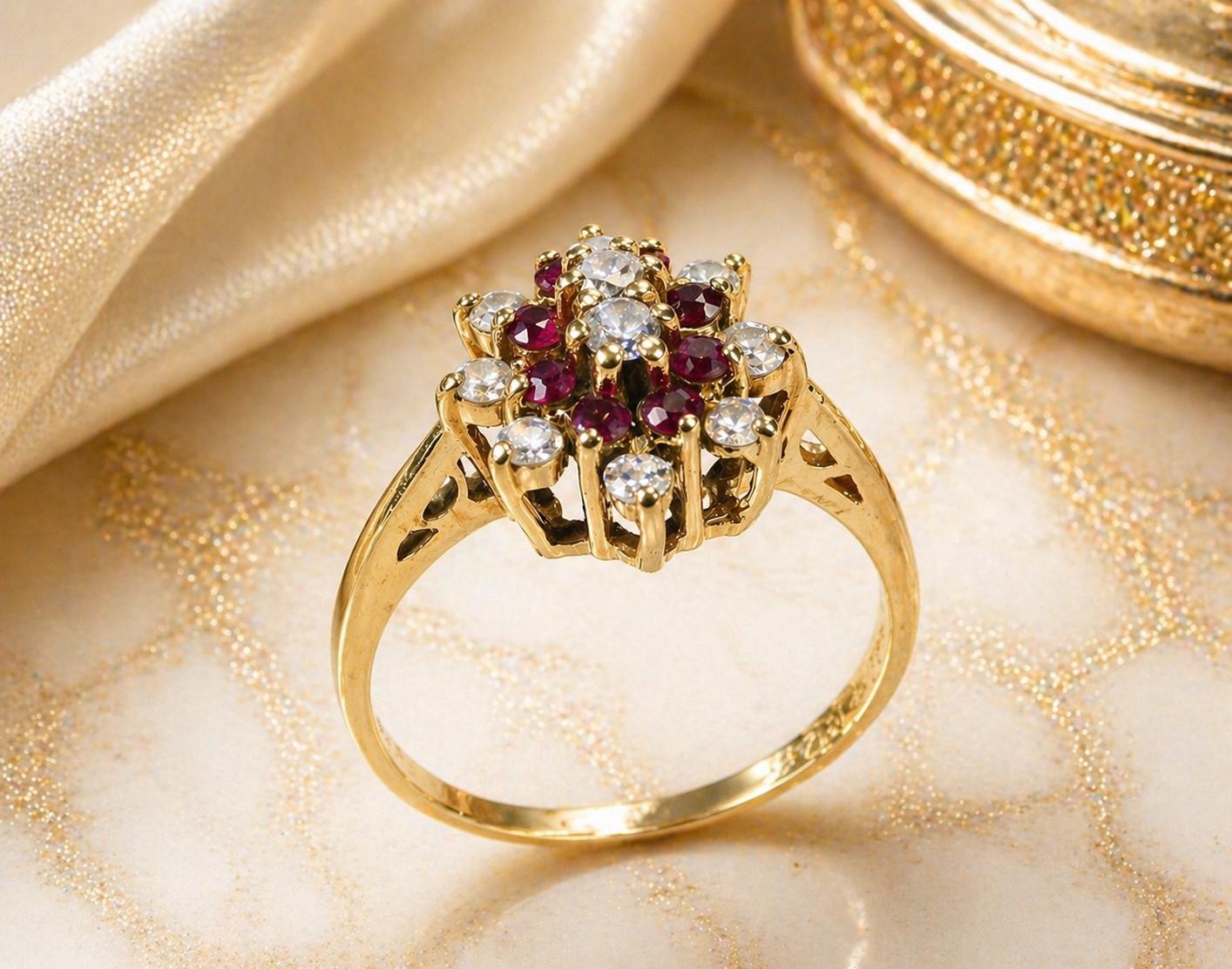
Fourteen-karat gold and a floral ruby cluster: this ring earns its second glance. The rubies sit in a floral arrangement that pulls from 1920s garden party aesthetics, giving it a vintage character without tipping into dusty. Color, structure, and a little drama, all on one finger.
This is the ring for someone who looked at a plain diamond solitaire and felt nothing. The floral setting does real work here, framing the rubies in a way that reads as considered rather than costume. It carries the kind of personality that comes from actual design history, not a trend cycle.
The 14K gold keeps it solid and wearable, not just decorative. If your jewelry tends toward the unexpected and you have zero interest in blending in, this one fits. Sophisticated rebellion has a pretty good look in fourteen-karat gold.
Art Deco Colombian Emerald Ring
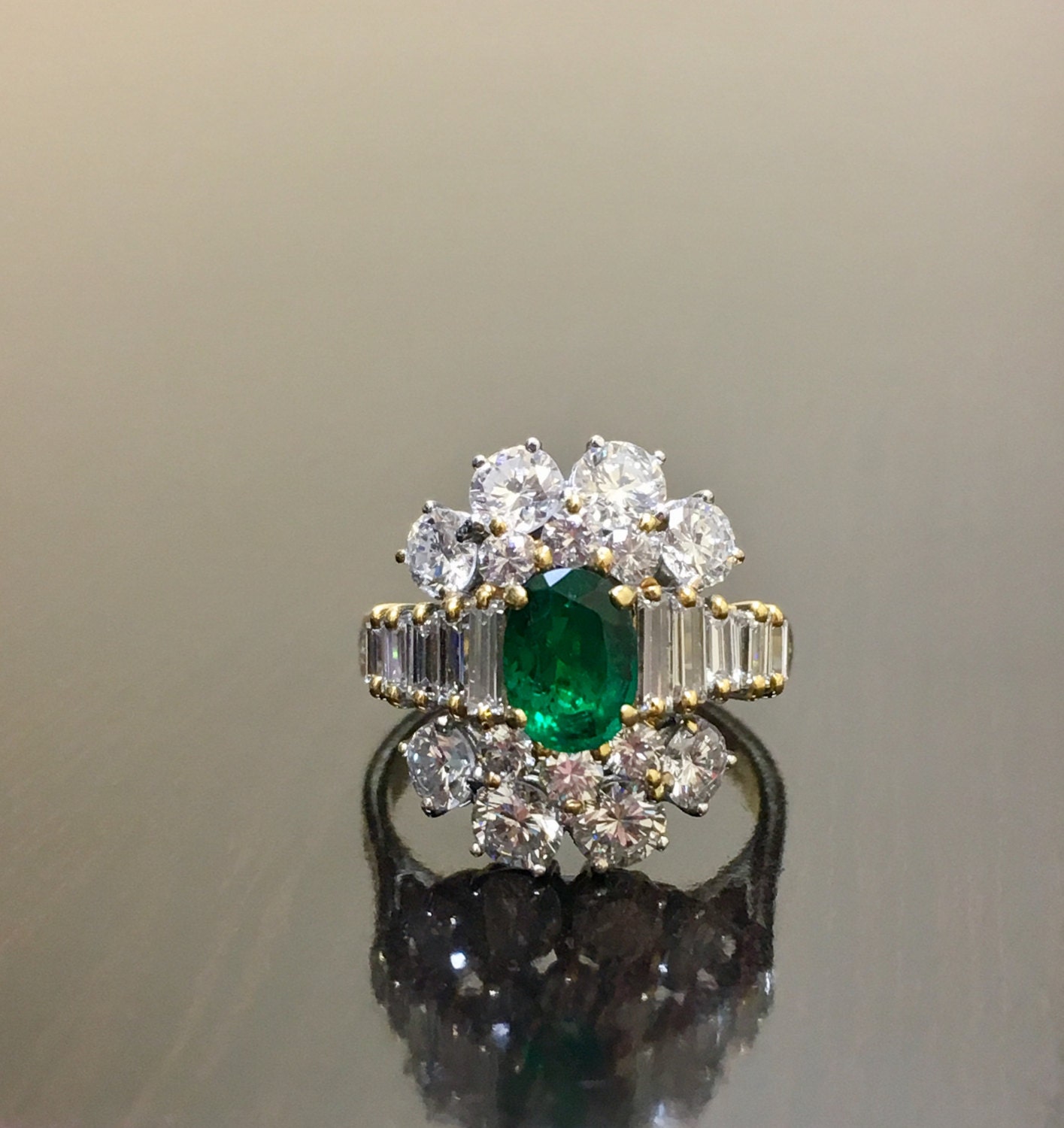
Colombian emeralds and 18k yellow gold, shaped into the geometric lines of Art Deco. This ring pulls off the Roaring Twenties without the costume-party vibe, each facet catching light the way only a well-cut stone can. The Great Gatsby had his green light across the bay. You get yours on your finger, which is a considerably better arrangement.
Emeralds earn their reputation the hard way. The depth of color in a Colombian stone puts your average gemstone to shame, and the rarity is real, not marketing copy. In a world drowning in diamond solitaires, an emerald in an Art Deco setting reads as a deliberate choice, the kind that says you did your research and liked what you found. It whispers “vintage” louder than any Instagram filter can shout.
Pop the question with it, wear it to a Tuesday lunch, or buy it for yourself because you spotted it and knew. This ring has the geometric bones of a serious antique and enough personality to carry a room. Timeless sophistication with a streak of boldness baked right in. The emerald has no notes.
Curved Pink Sapphire Tiara Band
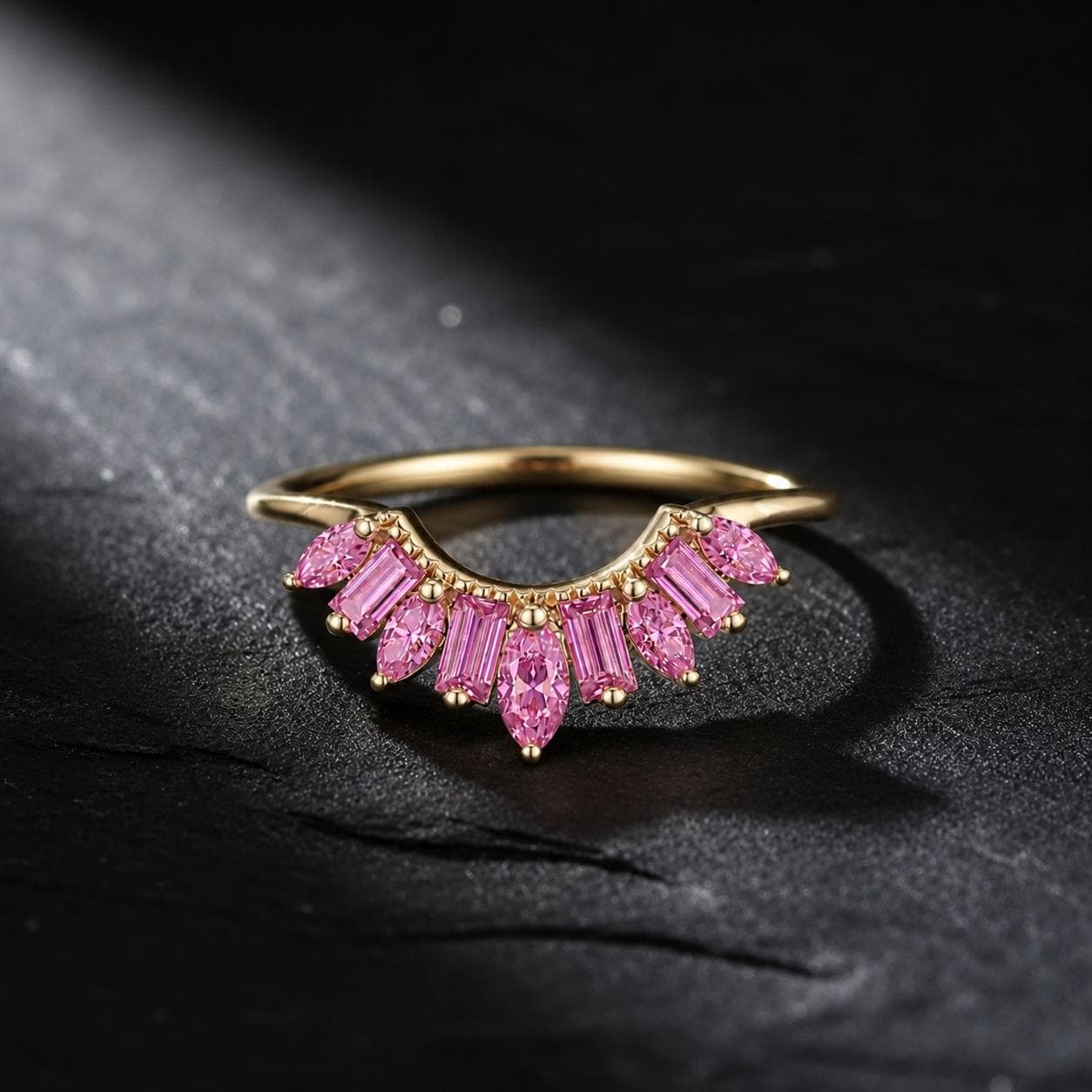
Curved and set with pink sapphires, this tiara band is the crown your finger actually gets to wear daily, royal responsibilities not included. The gentle arc hugs an engagement ring snugly, so the two sit flush against each other without gaps or awkward spacing. Clean, considered, and a little bit extra in the best possible way.
Pink sapphires are doing real work here. They bring color and personality to a silhouette that already has presence, and they sidestep the predictability of an all-diamond stack without trying too hard. This is the band for someone who looked at the standard options and wanted something with a bit more nerve.
Wear it paired with a solitaire or stack it solo when you want the tiara moment all to itself. The curve means it plays well with others, but it holds its own just fine too. If your jewelry collection has been missing something that reads equal parts refined and unexpected, this is a strong candidate.
Cushion Cut Black Spinel Halo Ring
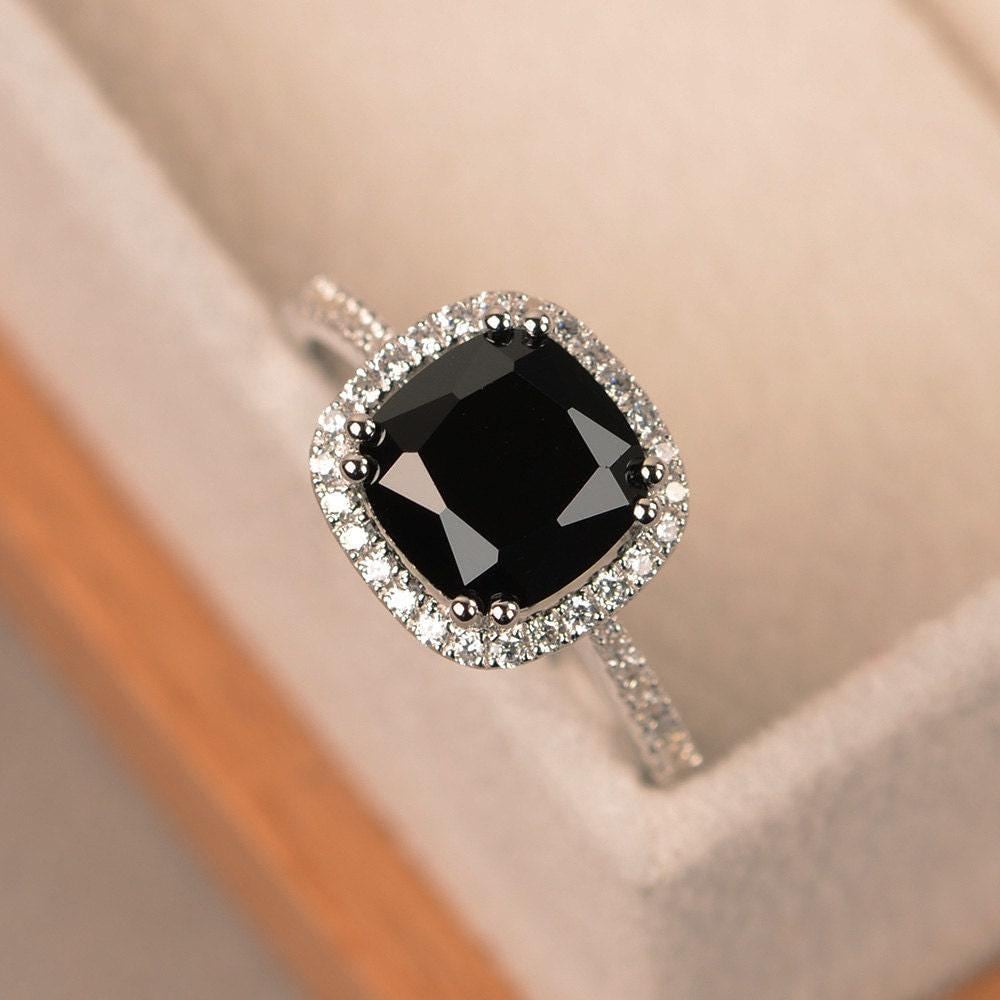
Black spinel, cushion cut, set in a halo of sparkling stones. The stone has that deep, near-black depth that reads as dramatic without trying too hard. It carries the same visual weight as a black diamond but with its own identity, and anyone who knows their gems will clock the difference immediately.
The halo keeps the center stone the focus while pulling in light from every angle. Spinel has a long history of being mistaken for other stones, which is part of its appeal. It plays the imposter with total confidence, and the cushion cut only adds to that slightly theatrical quality.
This is the ring for someone who finds a solitaire diamond a bit too predictable. The combination of the dark center stone and the surrounding sparkle gives it a contrast that photographs well and looks even better in person. Bold without being loud, specific without being obscure.
Edwardian No-Heat Ruby Ring
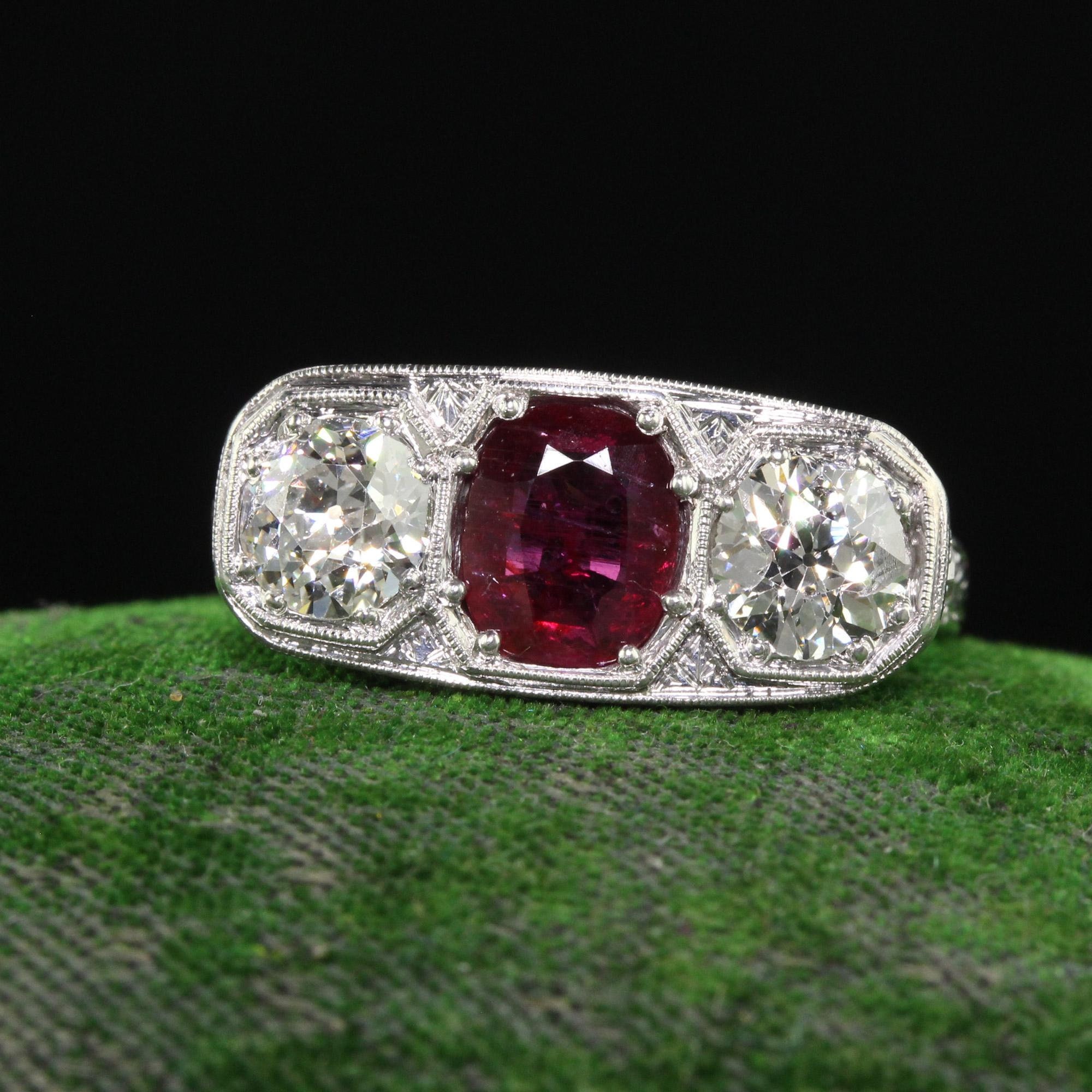
A no-heat ruby in an Edwardian platinum ring is about as rare a combination as you’ll find. The stone’s deep natural red has never seen a heat treatment, which means what you’re looking at is exactly what came out of the ground. No lab intervention, no color correction. Greta Garbo comparisons are fair.
The platinum setting is period-correct Edwardian work, the kind of detailed metalwork that takes actual time and skill to produce. This is a ring that carries a history before it ever gets to you, and it wears that history quietly rather than announcing it. Rubies of this caliber tend to get overshadowed by the diamond market, but collectors who know their stones understand exactly what a natural, untreated ruby is worth.
If you want something to wear down an aisle or to a garden party that nobody else will be wearing, this is it. A platinum Edwardian mounting with a no-heat ruby is a specific, considered choice. It says you did your research and you have taste. The diamond conversation can happen elsewhere.
Rose Gold Emerald Cut Aquamarine Ring
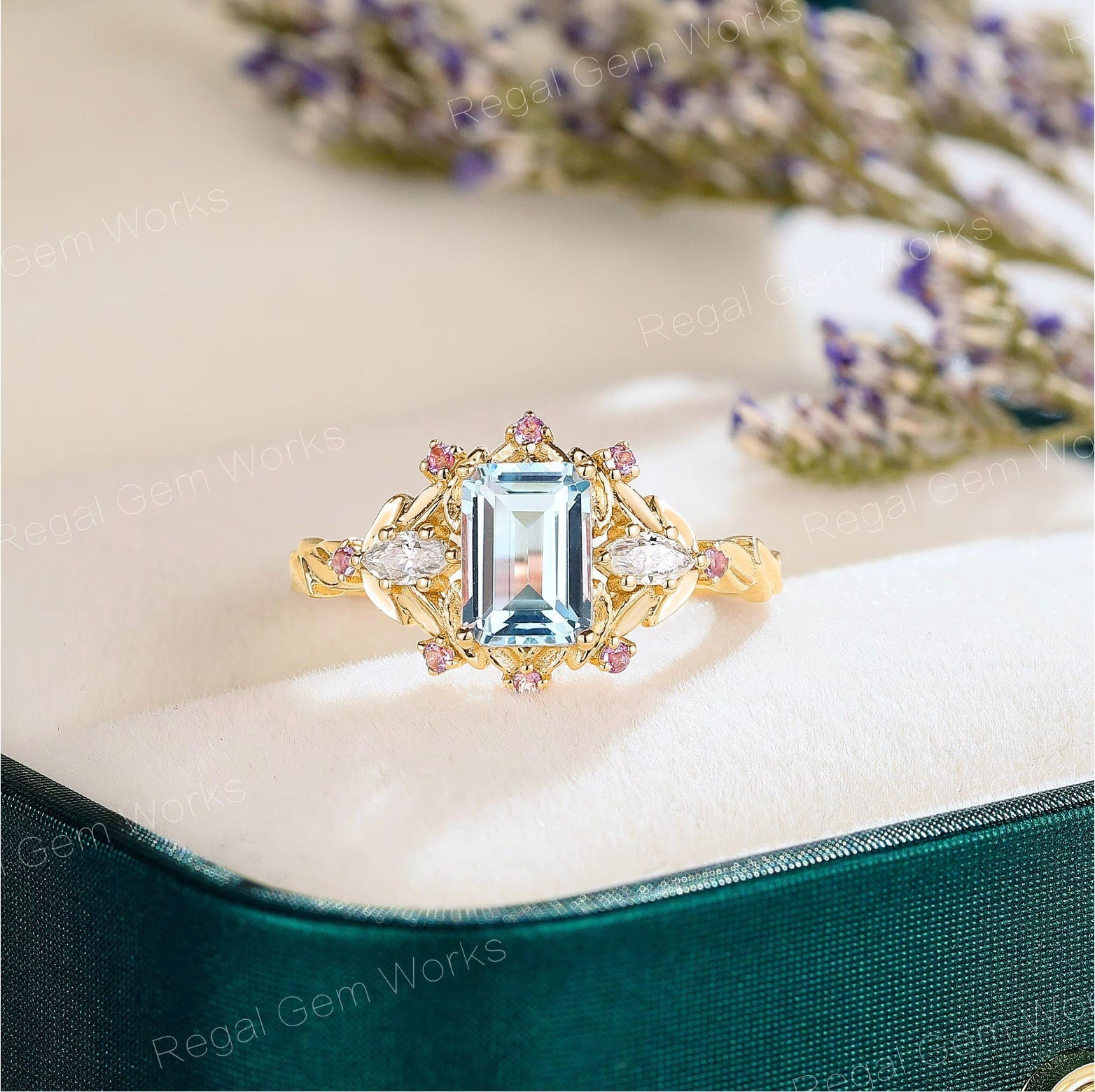
An emerald cut aquamarine set in rose gold, this ring leans hard into art deco geometry. The long, stepped facets of the emerald cut do something different from a brilliant: they reflect light in broad, glassy flashes rather than sparkle, so the pale blue of the aquamarine reads with real clarity. The rose gold setting pulls warm against the cool stone in a way that just works.
Aquamarine sits at 7.5 to 8 on the Mohs scale, durable enough for daily wear, and its blue-green color comes from trace iron in the beryl crystal. That calm, watery tone is part of why the stone has been a go-to for people who want color without the drama of a sapphire or emerald.
As engagement rings go, this one is a deliberate departure from the standard diamond solitaire. The combination of a colored stone, a graphic cut, and a warm metal keeps it distinctive without being loud. If a conventional diamond ring feels like someone else’s choice, this is worth a serious look.
Victorian Two Tone Pearl Halo Ring
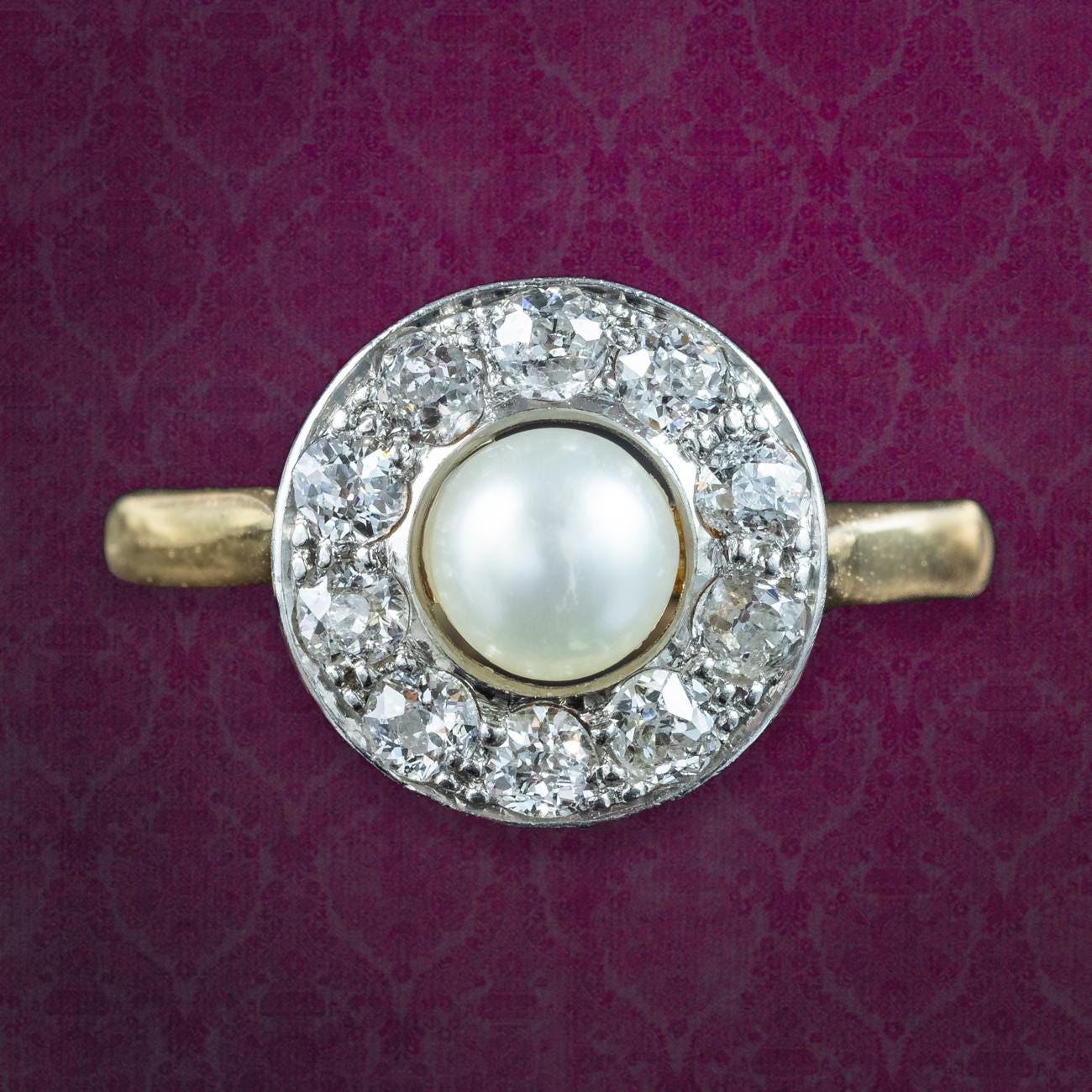
The Victorian Two Tone Pearl Halo Ring is built around genuine pearls, set in two tones of precious metal that frame the stone with period-appropriate formality. The halo silhouette pulls straight from Victorian jewelry tradition, where layered metalwork and organic gemstones did the heavy lifting that diamonds do now.
Pearls have been quietly holding their ground against the diamond monopoly for centuries, and this ring makes the case without apology. The vintage styling gives it a specificity that a solitaire diamond simply cannot replicate. It reads as a deliberate choice, which is exactly the point.
Wear it as an engagement ring, a right-hand statement, or just proof that you know your jewelry history. The two-tone setting keeps it from reading as a costume piece, and the genuine pearl at the center means it ages with you rather than against you. Classics survive because they were never trying to be trendy in the first place.
Colorful Gemstone Engagement Rings
14K White Gold Amethyst Ring
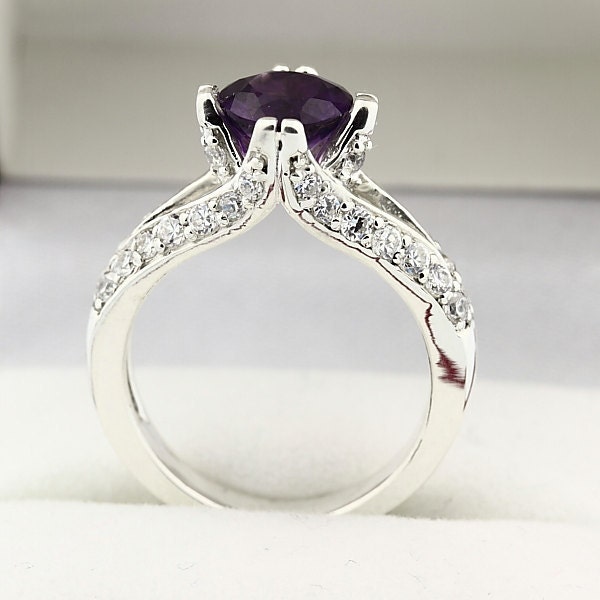
Set in 14K white gold, this amethyst ring is for anyone tired of blending in. Amethyst has been adorning royalty since Cleopatra’s time, so yes, it carries some history. The deep violet hue draws people who find diamonds a little too predictable, and honestly, they have a point.
This is a conversation starter. A showstopper. It holds the weight of centuries while sitting squarely in the present, which makes it a strong choice for anyone who wants their jewelry to mean something beyond “I found it on sale.” The 14K white gold setting keeps things sharp without competing with the stone.
In a world full of clear stones, purple is a deliberate move. When the light catches that amethyst at the right angle, it does something diamonds simply cannot. That’s the whole appeal: a stone with actual character, set in metal that lets it do the talking.
Handcrafted 14K 3 Carat Emerald Ring
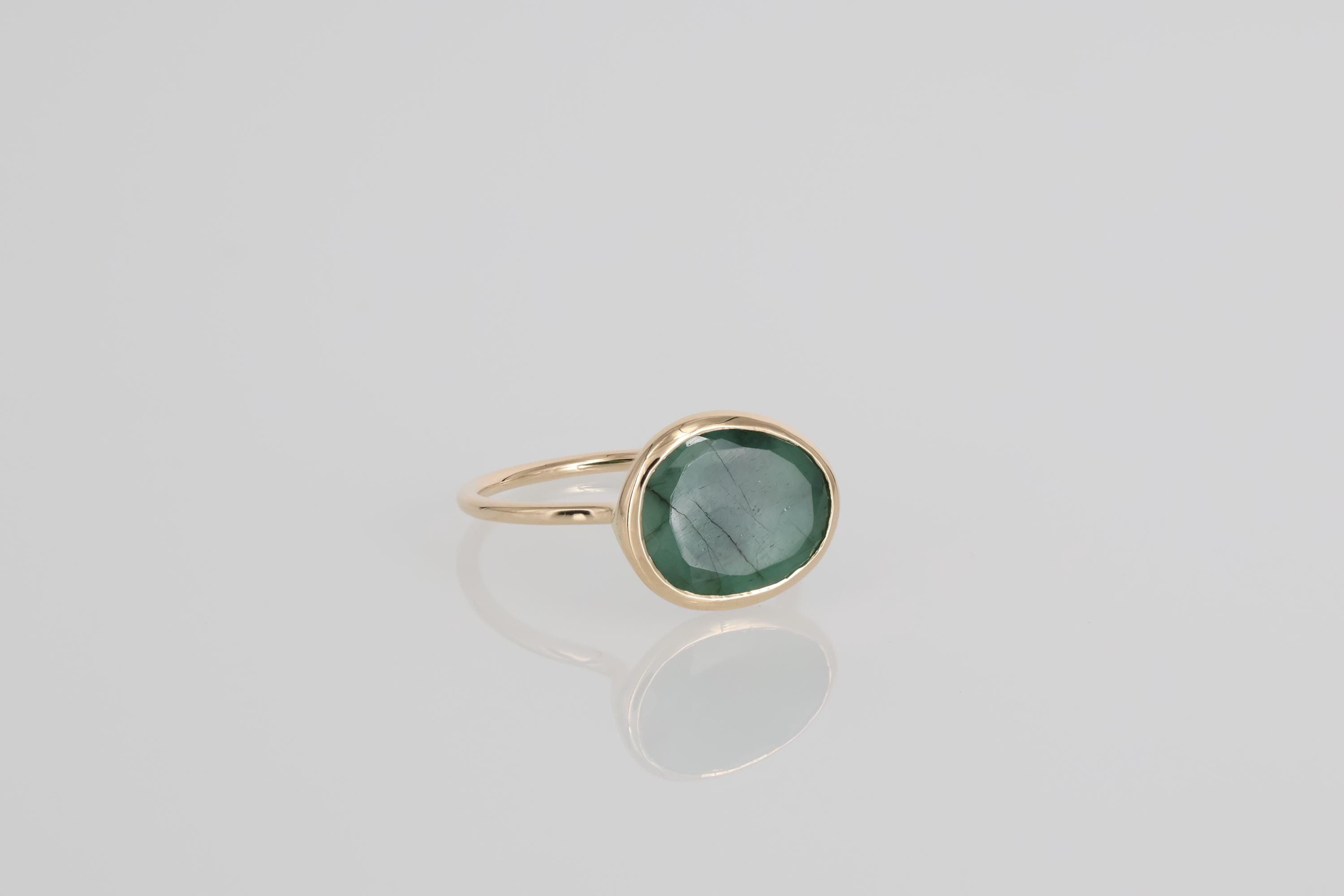
Handcrafted in 14K gold with a 3-carat emerald at the center, this ring does not whisper. The stone’s deep green commands a room the way only something genuinely oversized can, and the gold band gives it the structural backbone to pull that off without looking cheap or costumey.
The 14K gold is solid and built to last, not a thin plating job that starts looking tired after six months. It frames the emerald cleanly, letting the stone do what a 3-carat stone should do: take over. This is a ring for someone who already owns enough understated pieces and has decided, correctly, that restraint is overrated.
It takes a certain confidence to put something this conspicuous on your hand and walk into a room. If that sounds like a problem, this is not the ring for you. If it sounds like a Tuesday, order it. The emerald’s color holds up under every kind of light, from a candlelit dinner table to the unforgiving fluorescents of a Monday morning. That kind of staying power is rare in a stone this size.
Mint Tourmaline Diamond Halo Ring
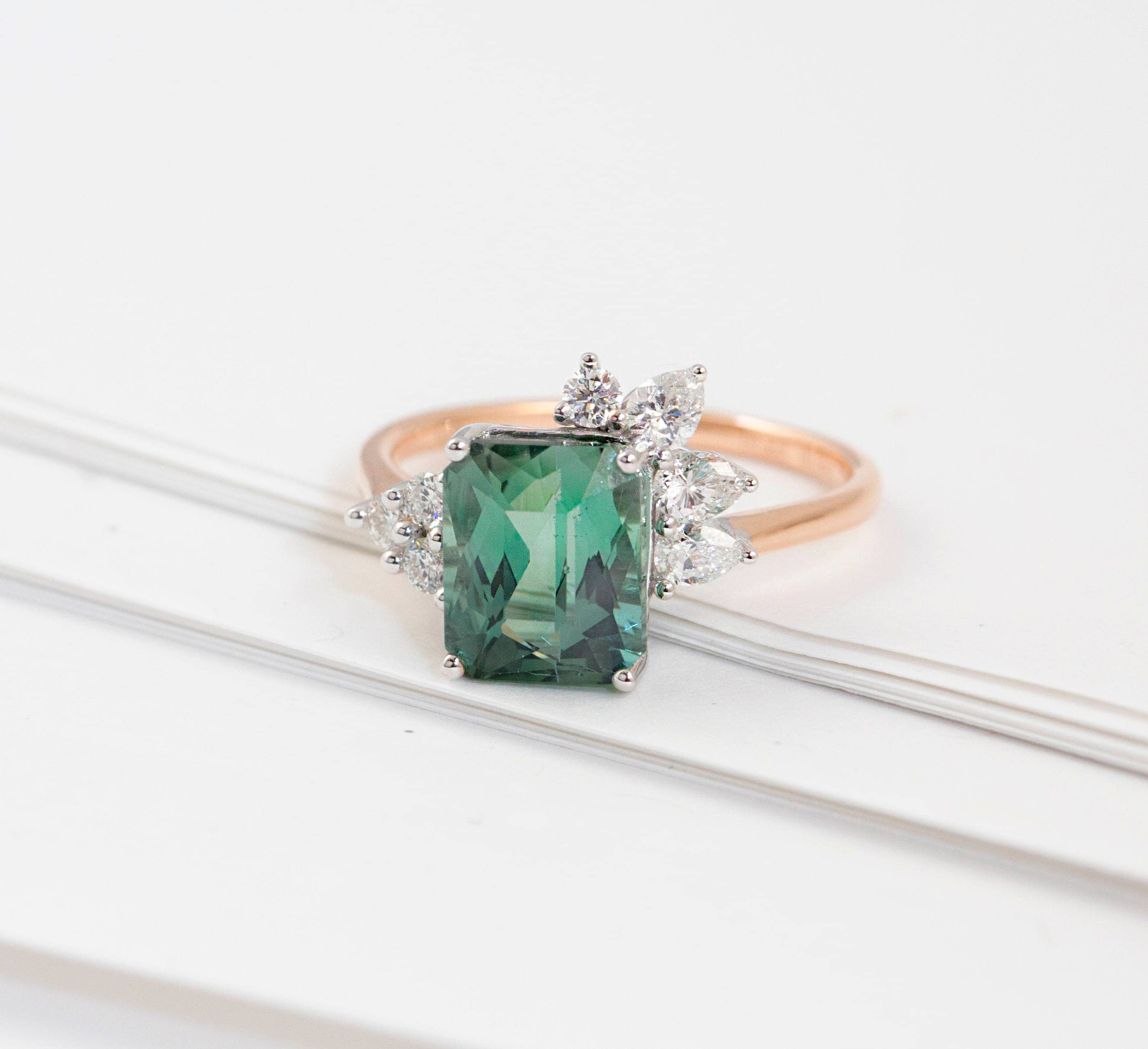
Mint tourmaline, framed by a halo of diamonds, catches the light in a way that stops people mid-sentence. It reads magical without trying. The color sits far outside the usual bridal palette, which is exactly the point. This is a confident choice for someone who finds a white solitaire a little too predictable.
The pairing works because the mint gem and the diamond halo pull in opposite directions and still land together. The setting is classic enough to feel timeless, while the stone itself does all the talking. Sophistication without the stuffiness.
This Mint Tourmaline Diamond Halo Ring is the kind of piece that turns a proposal into a personality statement. If the person you’re buying for writes their own rules, this ring already speaks their language. Admit it, you’re intrigued.
Oval Sapphire Double Halo Ring
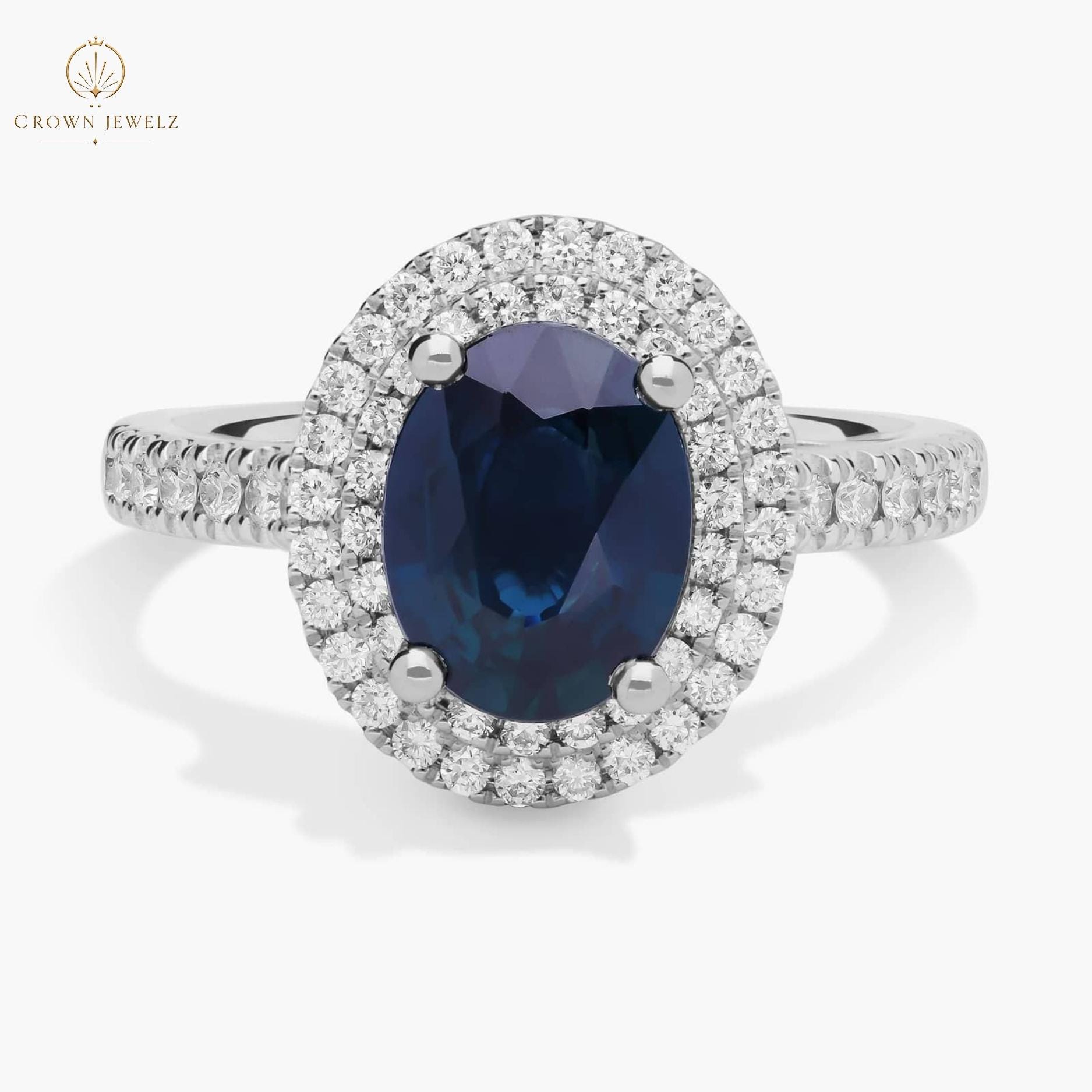
Oval sapphire, check. Double halo of diamonds, check. Extravagance that whispers rather than shouts? Absolutely. This ring is the gemstone equivalent of a perfectly mixed cocktail: a classic with a twist. Sapphires aren’t boring blue pebbles. They’re the grown-up choice for people who actually know their stones.
Sapphires are tough, not “start-a-bar-fight” tough, but more “withstand-the-test-of-time” tough. They’ll handle whatever life hurls your way without losing their composure. The double halo isn’t about piling on the glam. It gives the central sapphire the spotlight it earns, a little show-off energy that’s entirely justified given the company it keeps.
This ring has a vintage pull without feeling like a relic. It sits in that rare zone where old-world elegance and something genuinely modern coexist without fighting each other. The kind of piece you pick when you want a gem with actual character, not just a pretty face on your finger.
Vivid Emerald Baguette Halo Ring
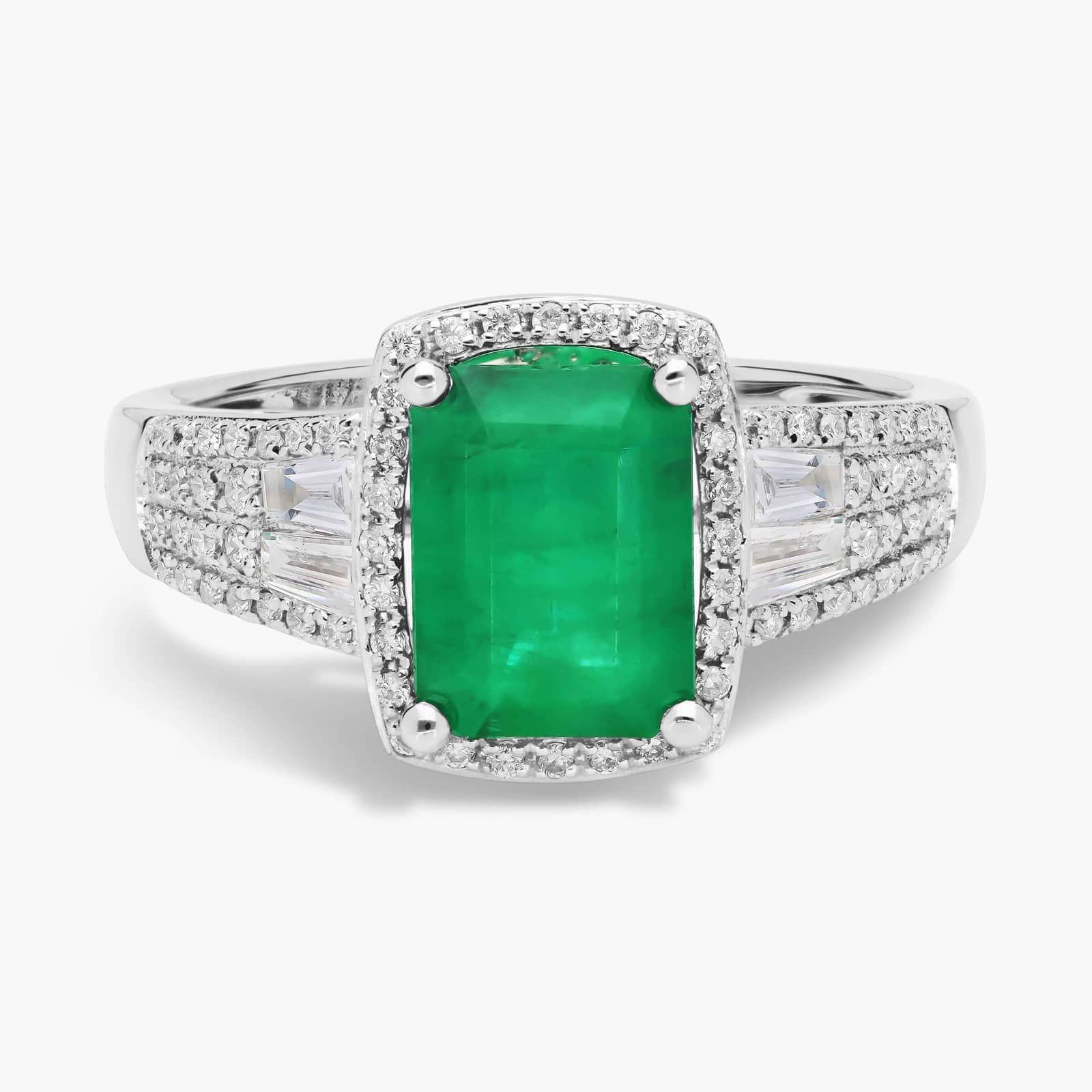
A baguette-cut vivid emerald sits at the center of this ring, framed by a halo of white diamonds that keep the whole thing from looking like it wandered off a museum display. The contrast works. The emerald pops, the diamonds hold their own, and nobody at the wedding gets upstaged. Well, almost nobody.
The band is polished white gold, which keeps the color story clean and gives the green somewhere cool to land. This is a complex piece that reads as effortless, the kind of ring that gets noticed without announcing itself. It has a lot going on, and it knows when to shut up about it.
If you want something with genuine presence that stops short of full spectacle, this is it. Extravagant enough to mean something, restrained enough to wear anywhere. The cheek is built in.
Your Unique Gemstone Ring Choice
Whatever style, cut, or stone you choose, a rock on the left ring finger should ultimately reflect the personality of the wearer. Don’t let long standing traditions make you shy away from choices that fit your own unique style. This is a piece that you will wear your entire life as a symbol of your one-of-a-kind love story. The only one who knows what that looks like is you!
Gemstone engagement rings may not be to everyone’s taste, but if you like the looks of those items listed above, consider choosing one as a unique alternative to an world awash with expensive diamond gems.
While pearls are not technically a gemstone, their widespread use in jewelry merits them a place on this list.
Stunning diamond gemstones have long dominated the market for wedding rings, and probably always will. What I love is that varieties of gemstones are now making a comeback.
The unique looks and sheer endless color combinations and patterns of gemstones means many brides are buying rings personalized to their own unique styles and tastes. If you’re in the market for an engagement ring, or just dreaming of the future, we’ve rounded up all you need to know about this sparkling new trend of gemstone rings.
We hope you enjoyed the unique, vintage, and colorful styles above, and can more easily buy a ring design to fit your taste — with classic gemstone flare!
Don’t forget to pin this to your Wedding Bands for Women Board for later!