
Guide to Wedding Cake Styles, Shapes, and Icing
You’ve spent weeks agonizing over color palettes and seating charts, and now you have to become a cake expert too? Between fondant, buttercream, ganache, and something called “gum paste,” it can feel like learning a new language just to order dessert.
Here’s the thing: your wedding cake isn’t just dessert. It’s a centerpiece, a photo opportunity, and (let’s be real) the thing half your guests are secretly most excited about. The style, shape, and icing you choose will affect how it photographs, how it holds up at your venue, and yes, how much it costs.
Consider this your no-nonsense breakdown of wedding cake styles, shapes, and icing types, so you can walk into that bakery consultation knowing exactly what you want. Or at least what questions to ask.
Note: Cake images you’ll see below come from real weddings – you can browse more real weddings here for even more inspiration.
Wedding Cake Tradition
Although plenty of wedding traditions have evolved in recent years, the cake continues to be part of most celebrations. The happy couple shares their first official sweet bite as husband and wife, and there’s something quietly magical about that moment, even for the most unsentimental among us.
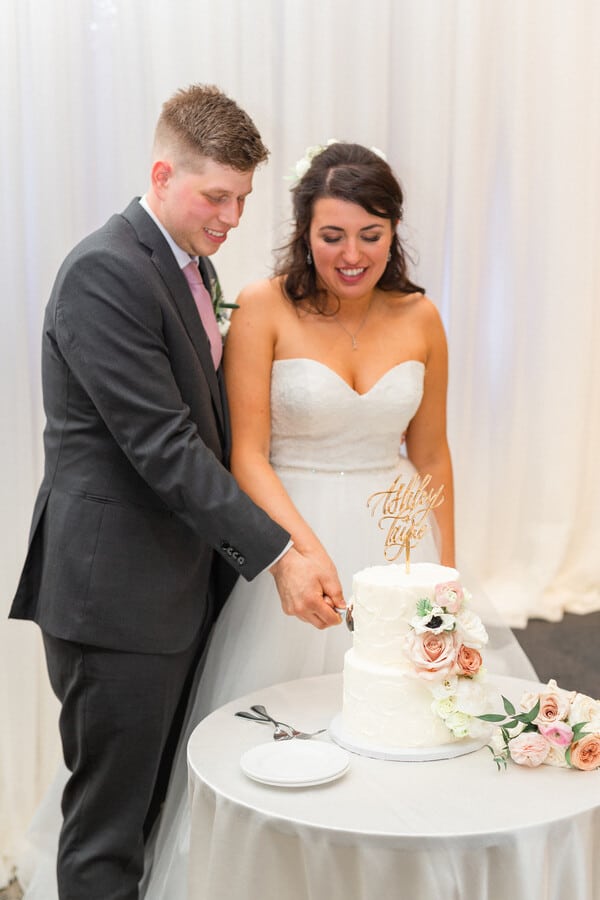
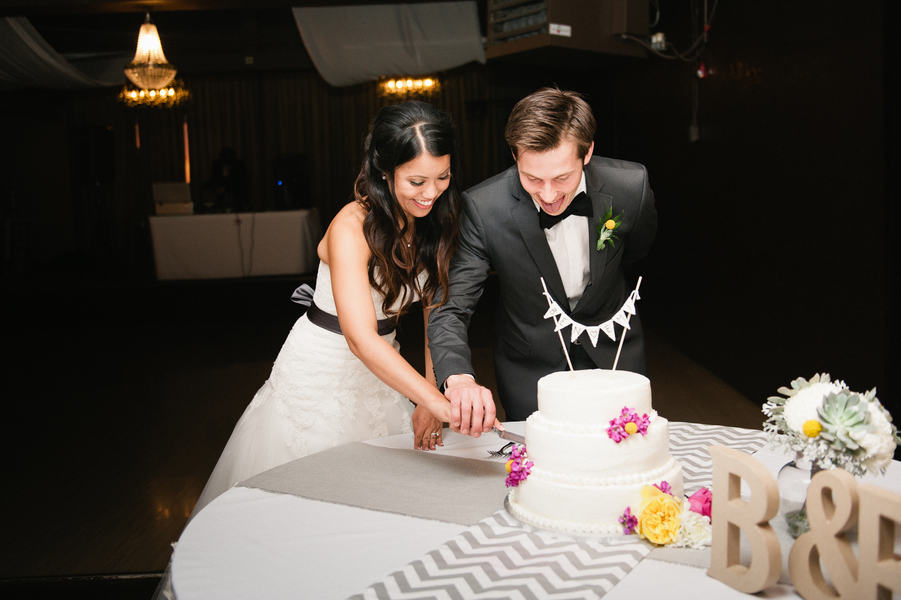
The cutting of the wedding cake is a highlight of the reception. It’s traditionally considered rude for guests to leave before the first slice has been shared, and given the amount of time, creativity, and (frankly) money that goes into a wedding cake, everyone should absolutely stick around for this moment.
Ever heard of a wedding tradition called the cake pull? It’s a Southern tradition that’s both charming and a little quirky.
Wedding Cake Design
Designing your cake can be both fun and delicious, especially when it comes to cake tasting day (arguably the best part of wedding planning). The design itself should be a collaboration between you and your cake maker. Your cake should fit the look and feel of your venue setting and theme.
For example, a five-tier white Victorian-inspired wedding cake probably doesn’t belong at a barnyard reception. This is an aesthetic choice as much as a practical one: cakes usually stand on display for hours before they’re served, and certain frostings like whipped cream, custard, mousse, or buttercream are too delicate to withstand much heat. An outdoor summer reception needs icing that can handle the temperature, which is something your baker will help you navigate.
When brainstorming ideas, consider the reception setting, the flavors that you and your partner enjoy, how the cake will pair with your menu, and above all, the cost. (Cake pricing is per serving, and the numbers add up faster than you’d think.)
Wedding Cake Styles & Construction
Most wedding cakes are layer cakes with tiers. The tiers are either separated by columns to provide extra height, or stacked directly with one layer atop another. Stacked tiers use dowel rods, cake plates, or separator plates to keep them from collapsing into each other (because gravity is real, and cake is heavy). Understanding these basics will help you communicate with your baker about the look you’re going for.
Traditional Cakes
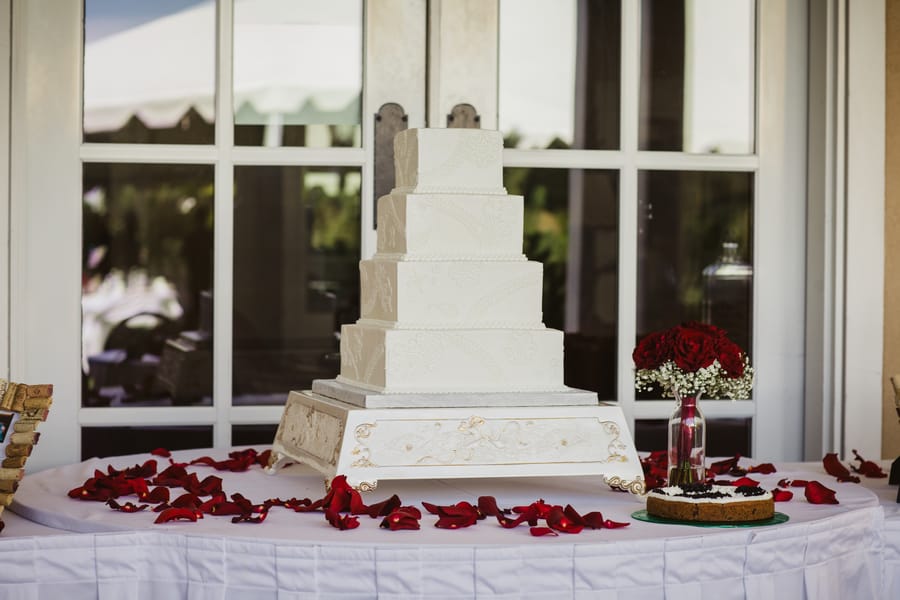
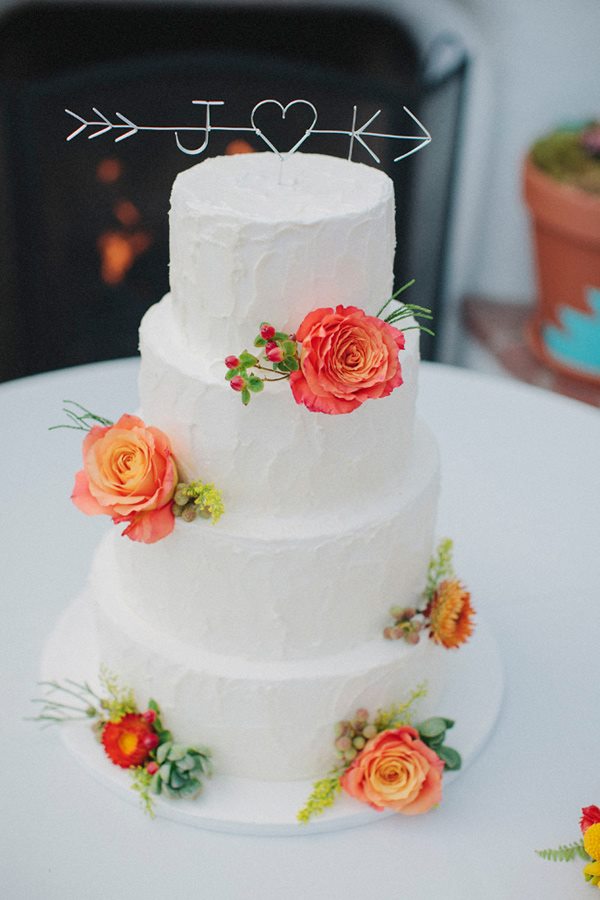
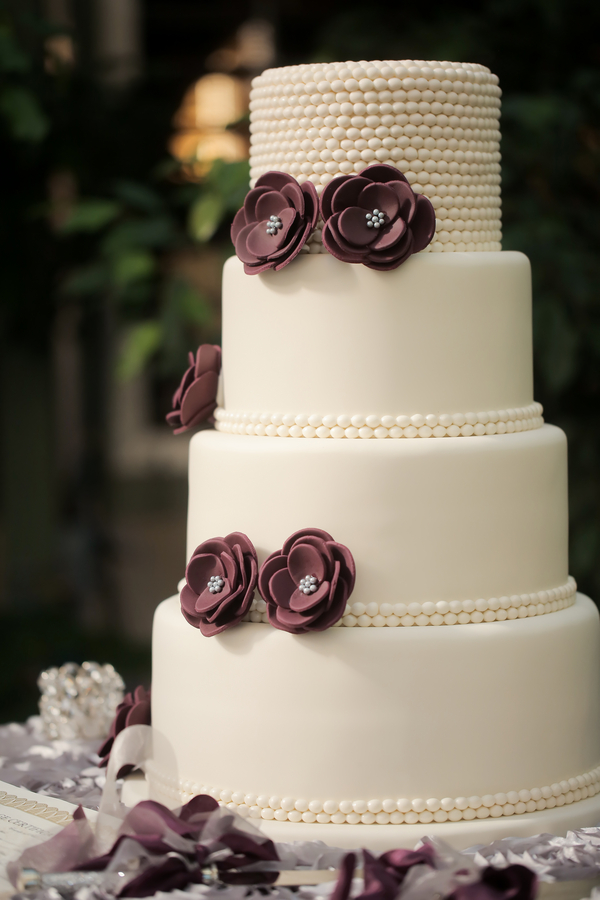
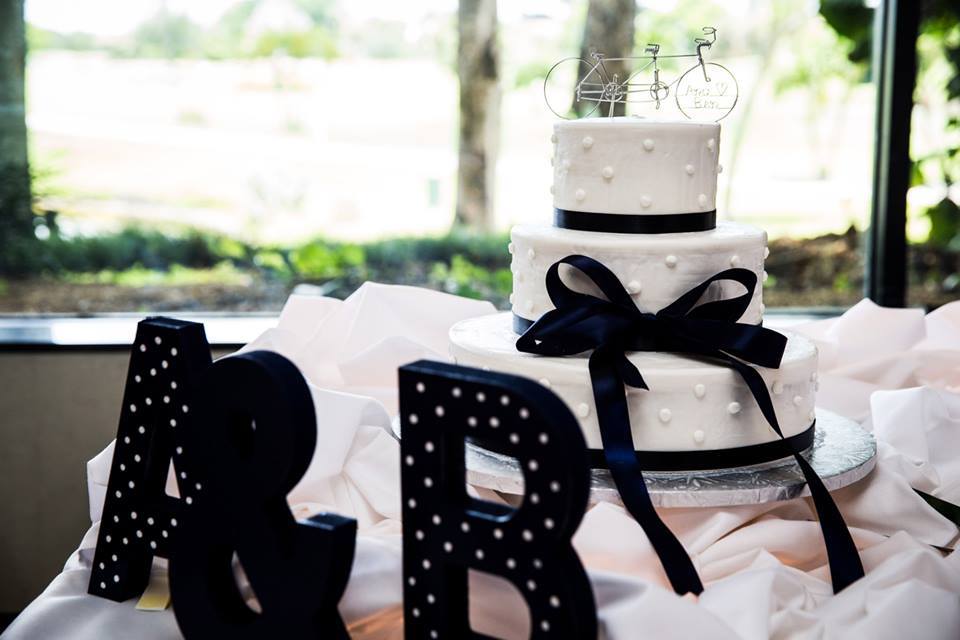
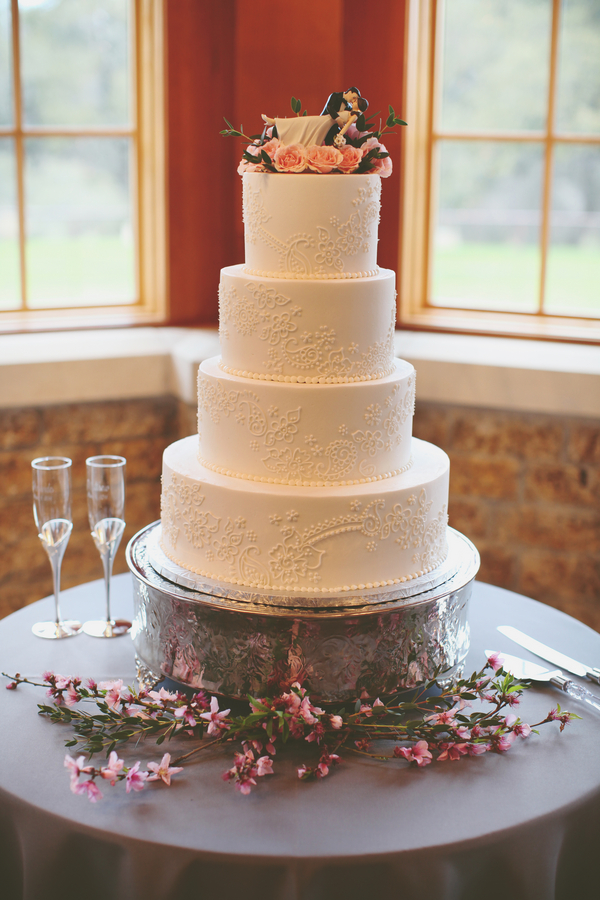
The classic. A traditional wedding cake is typically a tiered cake in either a round or square shape, finished with white or cream fondant icing. You’ll often find smooth finishes, white piped detailing, ribbon borders, and flower decorations, either fresh or sugar-crafted. Think: the cake your parents probably had, but hopefully with better flavor.
Traditionally, fruitcakes were used both in America and England because they’re hardier and don’t need refrigeration, which was a big deal before climate-controlled venues existed. These days, most couples opt for something their guests will actually enjoy eating, but the tiered silhouette remains timeless. Traditional cakes work beautifully for formal or semi-formal weddings, ballroom venues, and anyone who wants a cake that photographs like a magazine cover.


Contemporary/Modern Wedding Cakes
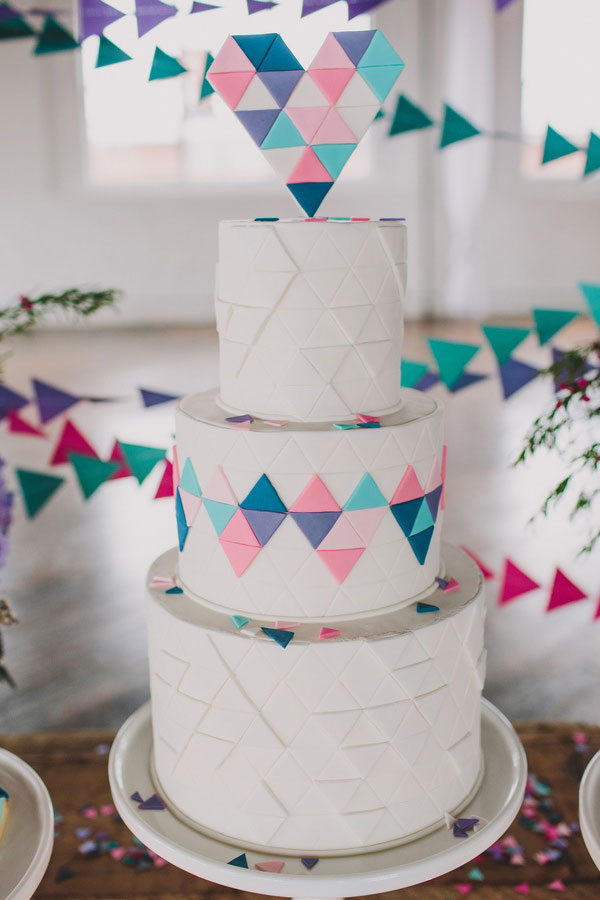
For couples whose wedding mood board is 90% clean lines and neutral tones, modern wedding cakes strip things back. Angled shapes will look more contemporary and cleaner than a round wedding cake, and you can mix and match shapes (square and hexagon, for instance) to give the cake a distinctly modern edge. If you want a truly whimsical and quirky cake, look at mixing three or more shapes.
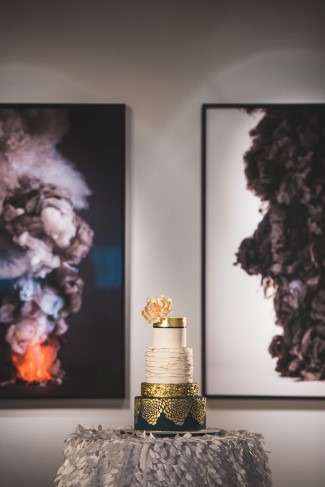
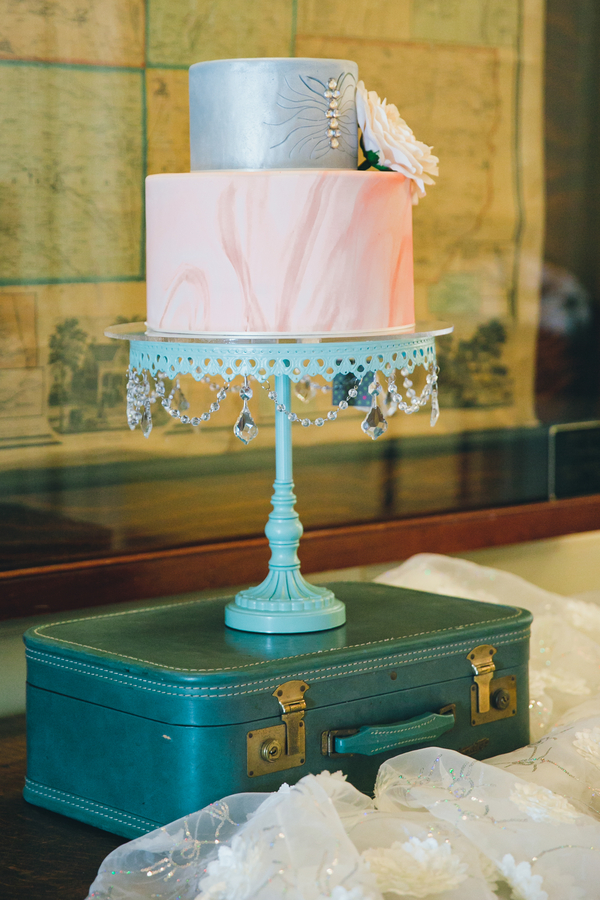
Modern cakes often feature unexpected finishes: concrete-effect fondant, watercolor washes, geometric patterns, or sharp metallic accents. The wow factor comes from restraint, which means your baker needs to be excellent at their craft. There’s nowhere to hide mistakes on a cake with three clean white tiers and nothing else. These cakes pair well with industrial spaces, art galleries, modern hotel venues, and weddings with a strong aesthetic point of view.


Naked and Semi-Naked Cakes
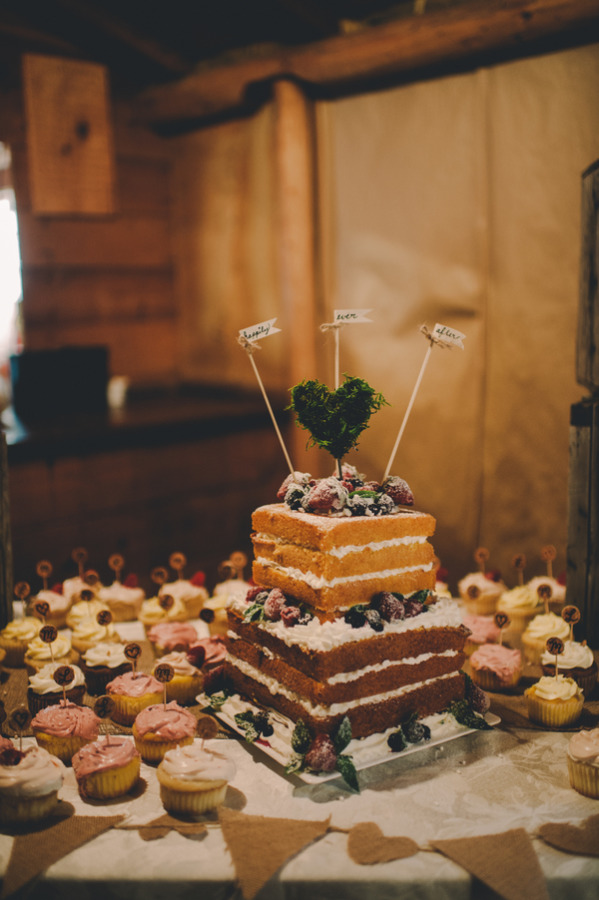
If traditional cakes are the tuxedo of the wedding cake world, naked cakes are the linen suit. They’re relaxed, charming, and they show off what’s underneath (the cake layers, that is).
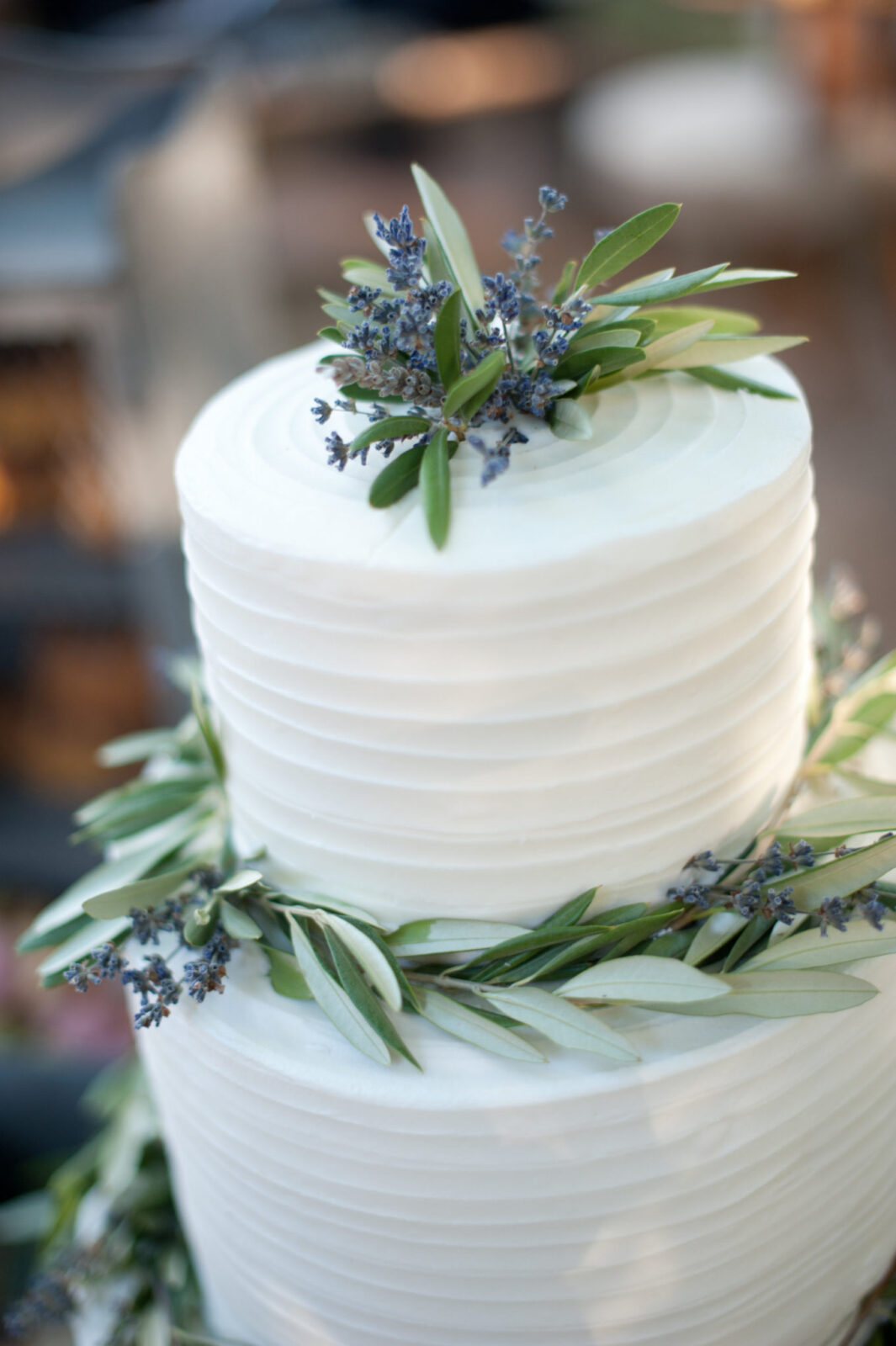
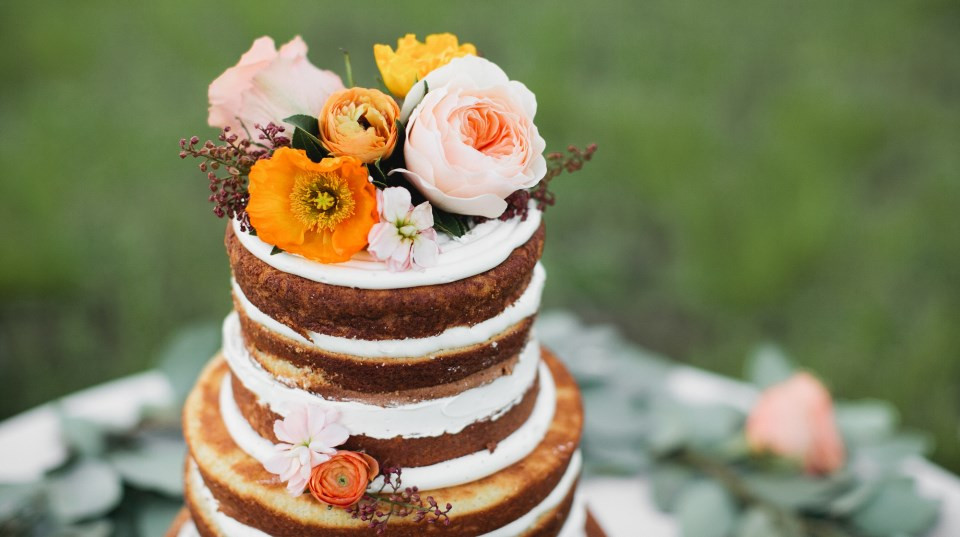
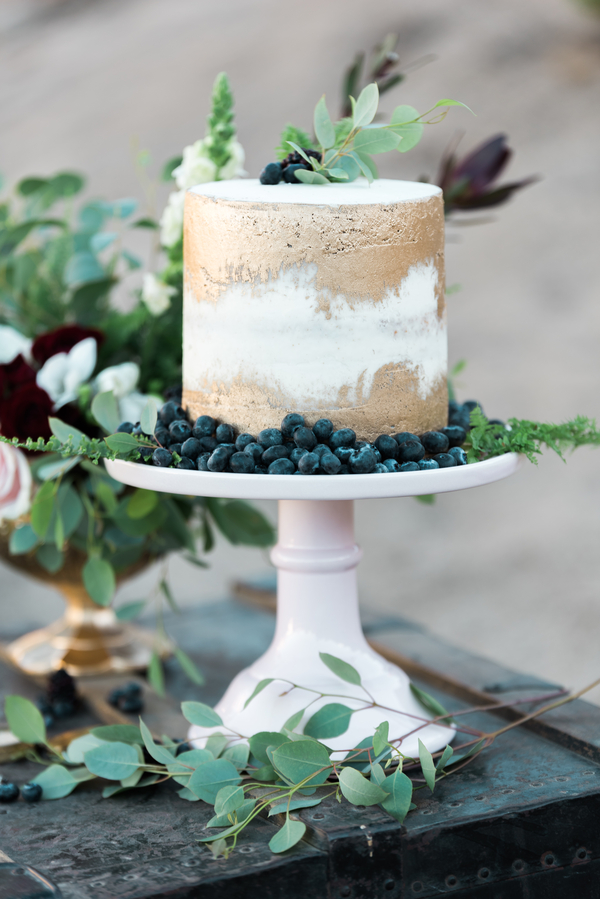
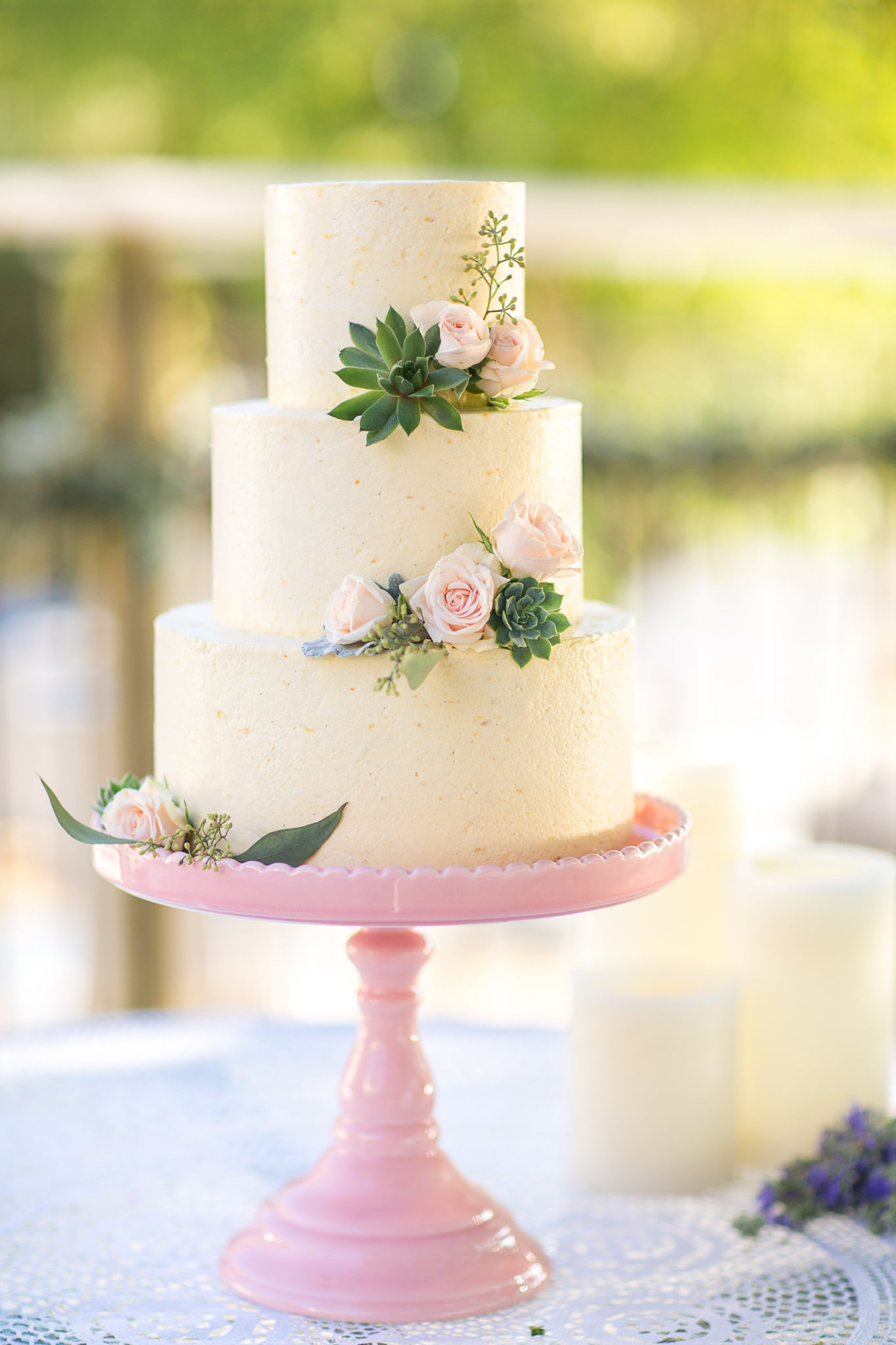
A naked cake has exposed layers with little to no frosting on the outside, letting the cake and filling do the talking. A semi-naked cake has a thin, sheer layer of buttercream that lets the layers peek through without looking completely bare. Both styles are typically decorated with fresh flowers, fruit, or greenery to add color and texture. The charm is in the imperfection. These cakes don’t need to look polished to look gorgeous, which makes them a natural fit for rustic, garden, and bohemian weddings.
One practical note worth mentioning: naked cakes dry out faster than fully iced cakes, so if your reception is outdoors in summer heat, talk to your baker about timing and how long the cake will be on display before serving.
Metallic and Luxury Cakes
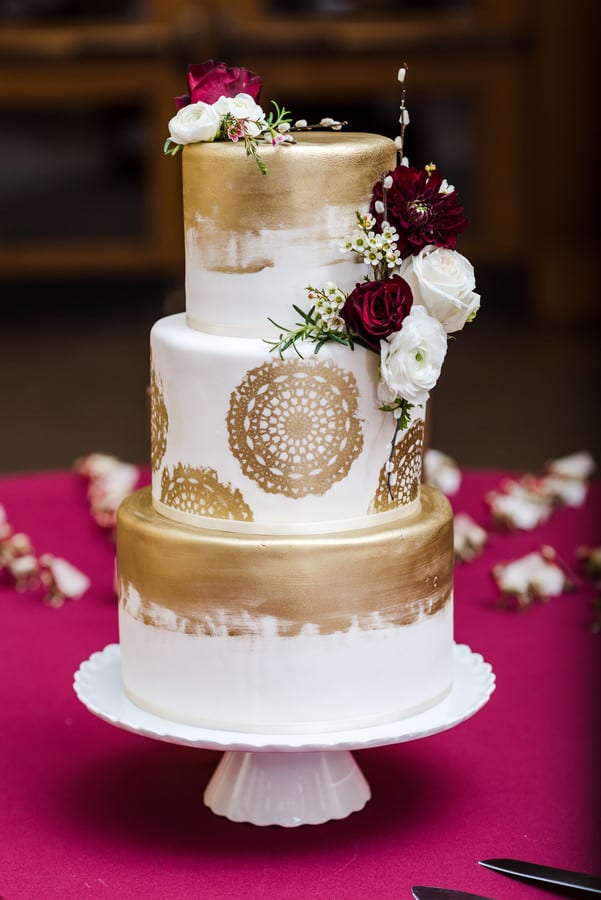
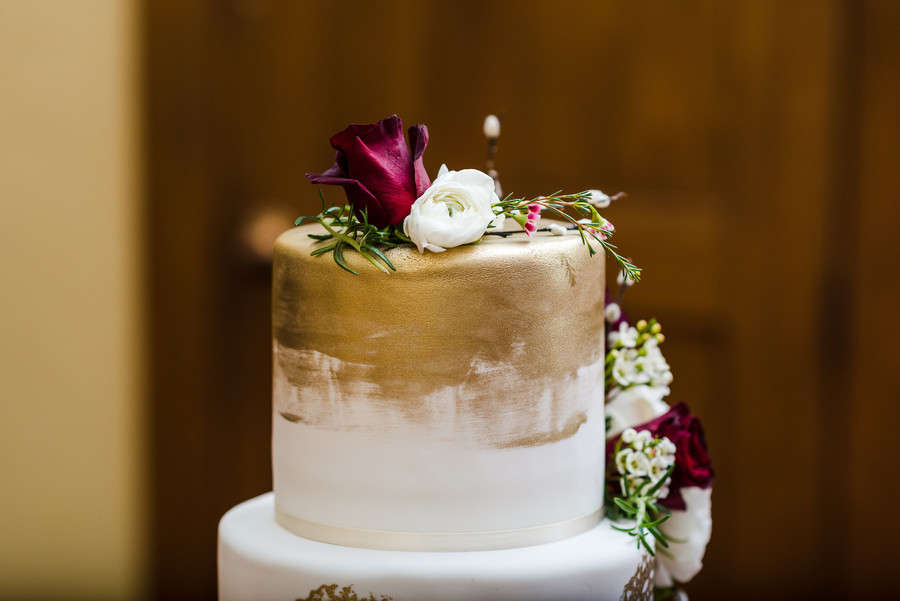
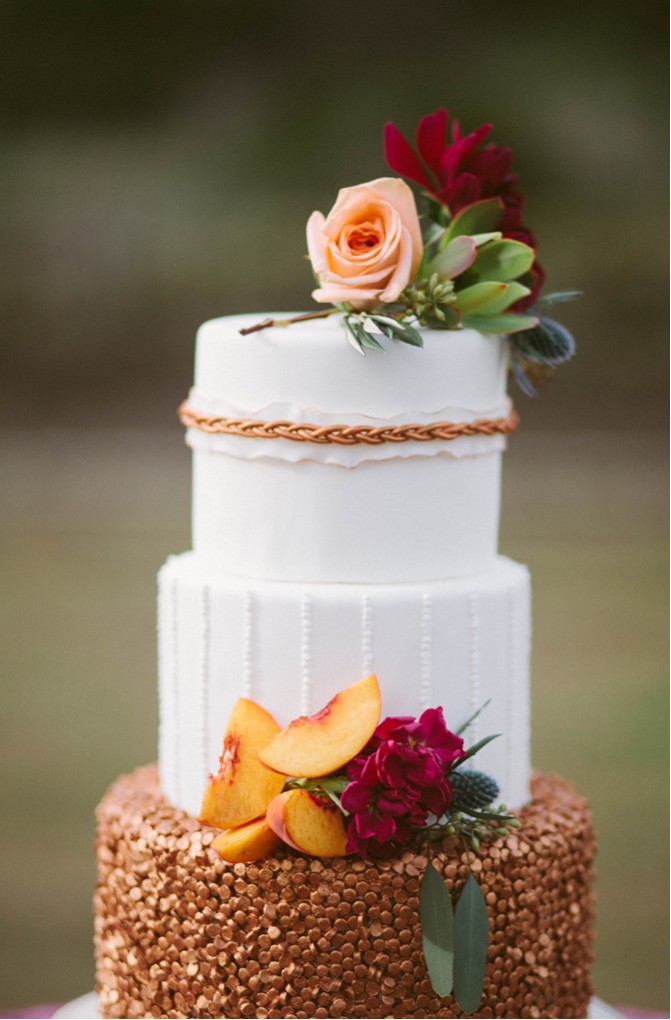
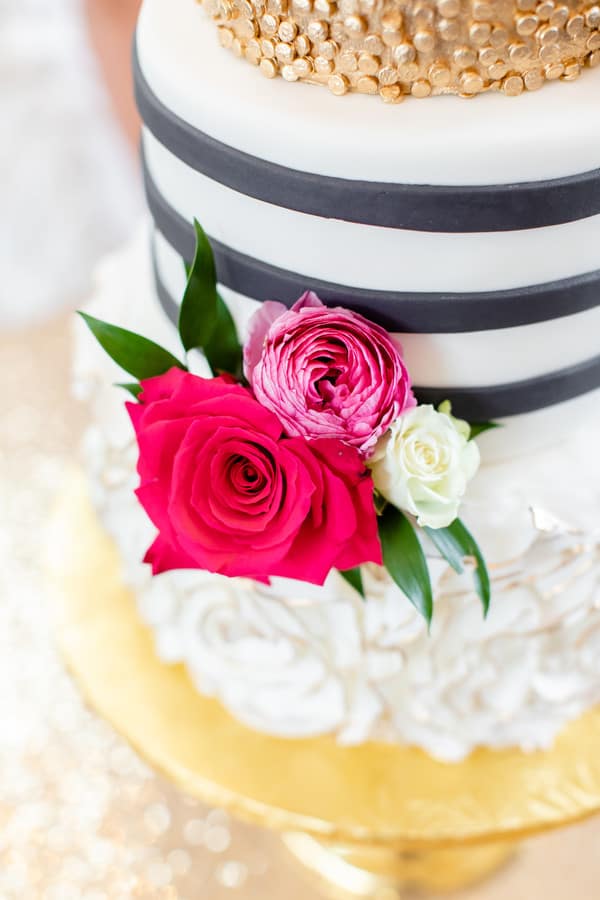
Gold leaf, silver brushstrokes, copper accents, rose gold shimmer. Metallic wedding cakes are for couples who want their cake to feel like a piece of jewelry. These cakes often combine metallic finishes with sugar flowers, cascading blooms, or pearl detailing for a look that’s opulent without tipping into “too much” territory (when done well).
Metallic finishes are typically achieved with edible gold or silver leaf, luster dust, or metallic food-safe paint applied to fondant. Some bakers create a hand-painted effect that gives each cake a one-of-a-kind look. One thing to keep in mind: make sure the metal tones match your overall decor, because mismatched golds (warm vs. cool) will bother you in photos for years.

Hand-Painted and Artistic Cakes
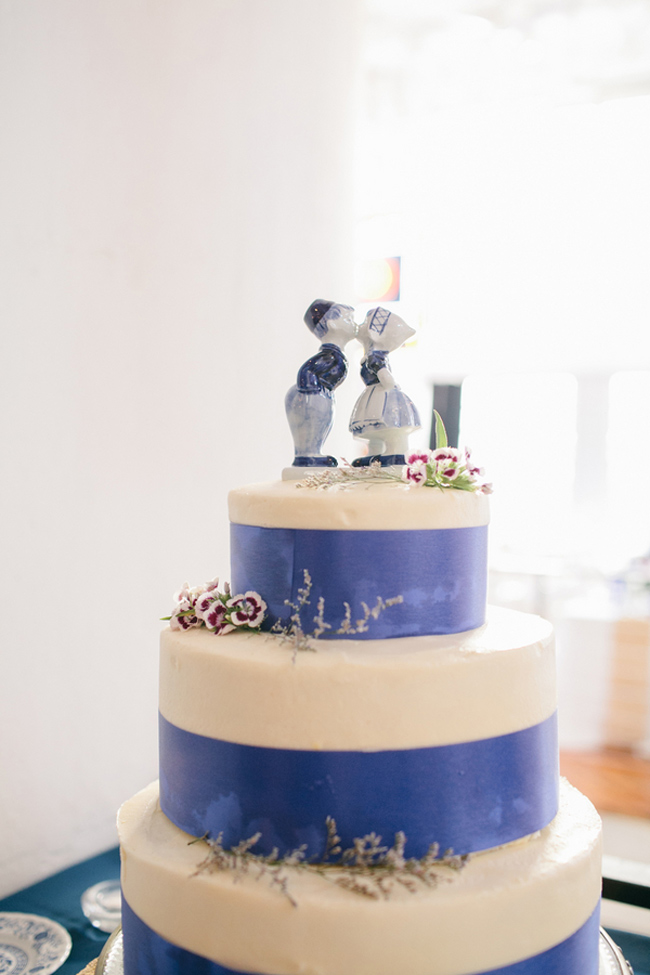
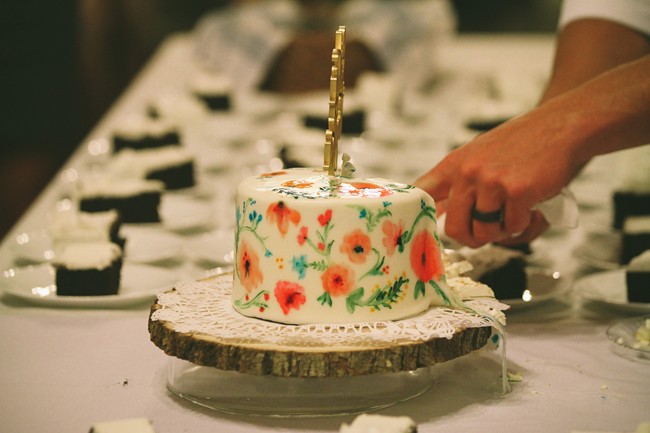
These are the cakes that make people say, “Wait, that’s edible?” Hand-painted wedding cakes feature designs painted directly onto fondant using food-safe colors: delicate florals, watercolor washes, intricate patterns inspired by chinoiserie or Delft pottery, or even motifs pulled from the couple’s wedding invitation suite.
This style turns your cake into genuine artwork, and it comes with an artwork price tag. Hand-painting is labor-intensive and requires a baker with real artistic skill (this is not a DIY situation). But if you want a cake that’s truly one of a kind and doubles as a conversation piece, it’s hard to beat.
Textured and Ruffled Cakes
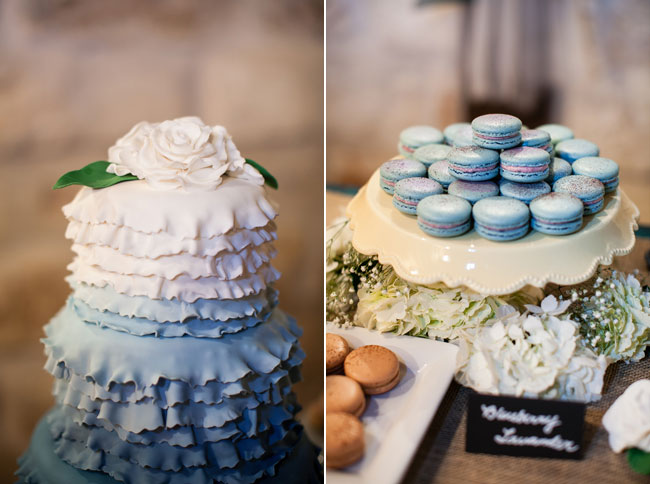
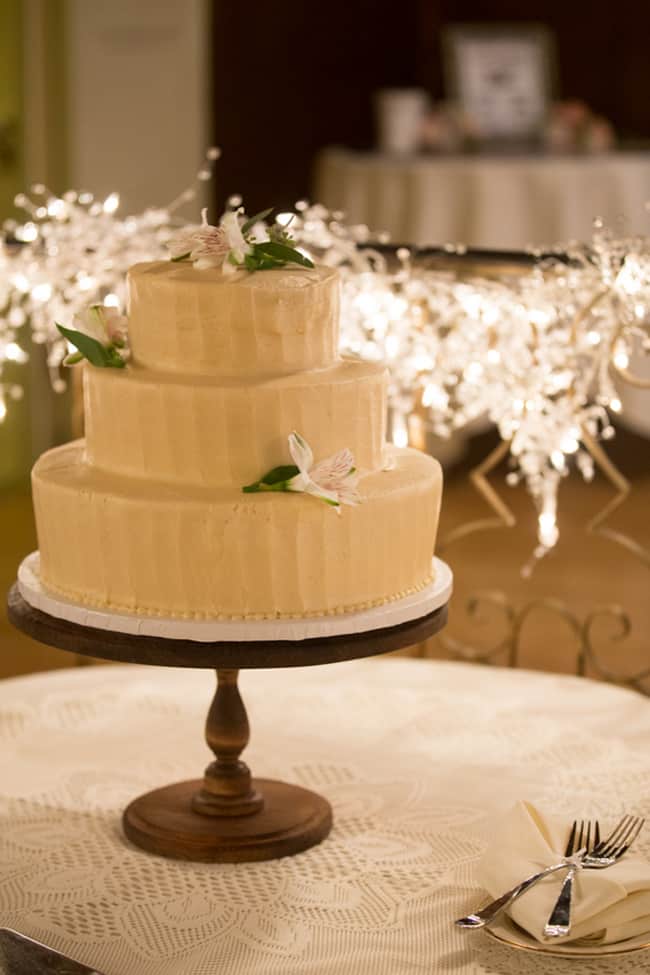
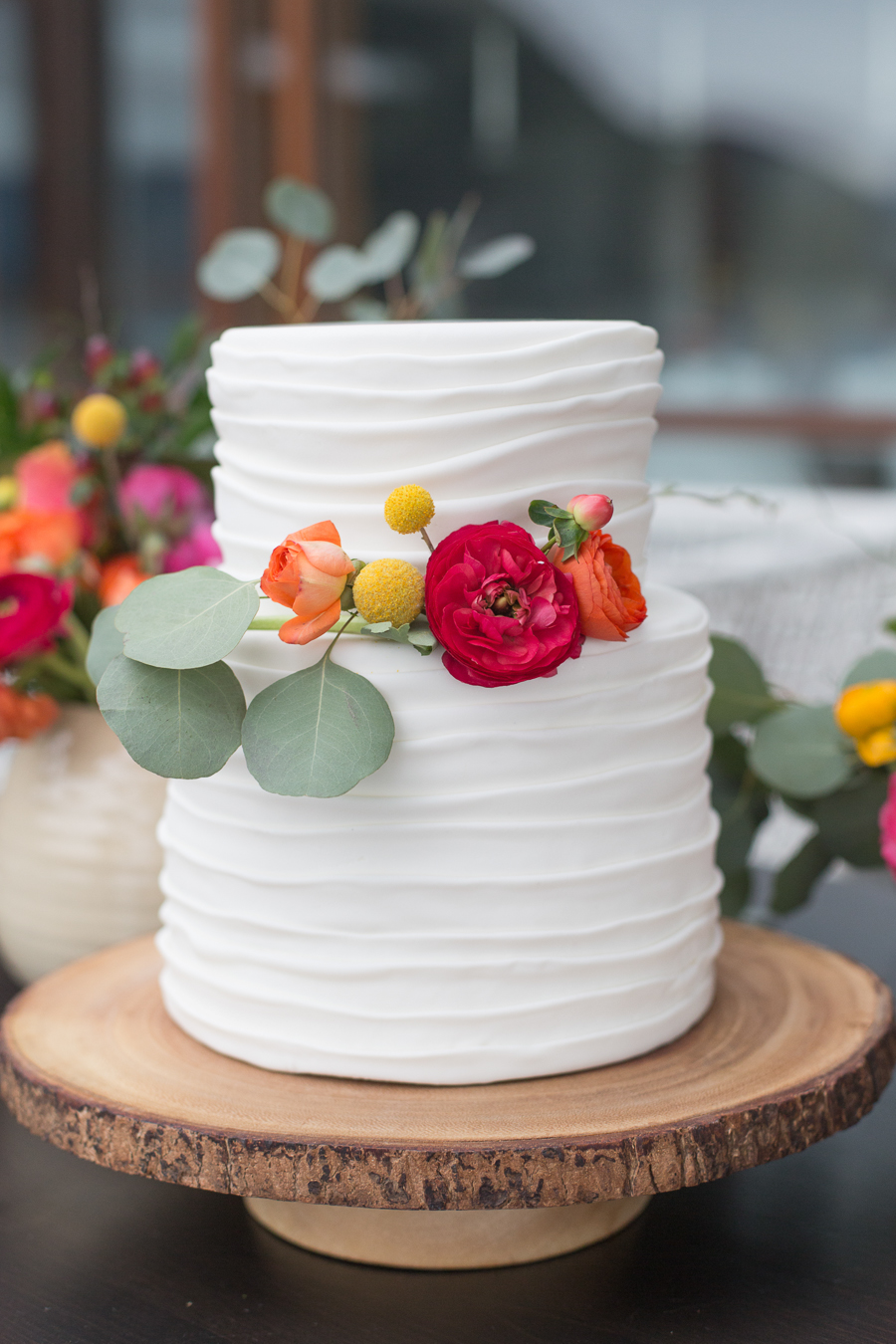
Not every cake needs to be smooth. Textured cakes play with dimension: ruffled fondant, buttercream rosettes, basket-weave patterns, quilted designs, or even coconut shavings for a beach or tropical vibe. These cakes have personality and movement, and they photograph beautifully because the texture catches light in interesting ways.
Ruffled cakes, where thin layers of fondant or buttercream are layered to look like fabric, add a romantic, almost whimsical quality. Textured buttercream with rustic swirls or palette-knife strokes gives a more organic, relaxed feel. Either way, texture adds visual interest without needing elaborate decorations.

Wedding Cake Flavors & Filling
This is the fun part. Follow your sense of taste, smell, sight, and even touch to choose a flavor that you both love. If you’re drawn to exotic flavors, be thoughtful of your wedding guests and make sure there’s at least one tier of good ol’ chocolate. It’ll be a crowd pleaser every time.
Fillings like banana, peanut butter, or coconut can inspire strong opinions (people either love them or absolutely do not), so consider offering an alternative if these are your primary selection. You want guests reaching for seconds, not politely hiding cake under a napkin.
Also worth thinking about: how your cake pairs with your reception menu. Just like you pair wine with food at your wedding, your cake flavors should complement the overall meal. A rich chocolate ganache cake pairs differently than a light lemon elderflower after a heavy Italian feast. Your baker and caterer can help you find the right balance.
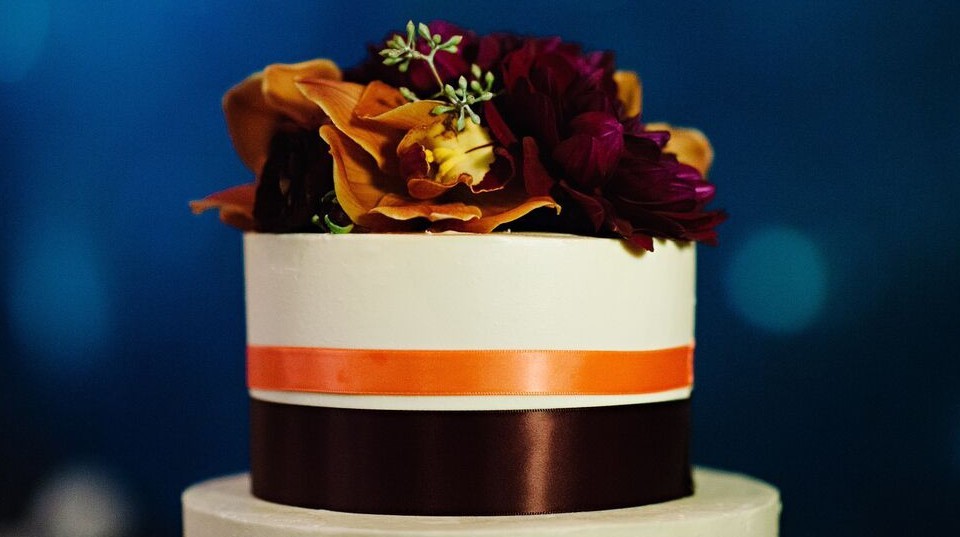
Wedding Cake Icing
Here’s what nobody tells you upfront: when it comes to wedding cake icing, weather conditions can trump taste. Icing can be unstable and delicate, and you unfortunately can’t choose based on flavor alone. If you’ve ever watched those baking shows where a gorgeous cake slowly loses its icing under hot lights, you already know the stakes. Let’s make sure that doesn’t happen to yours.

Fondant
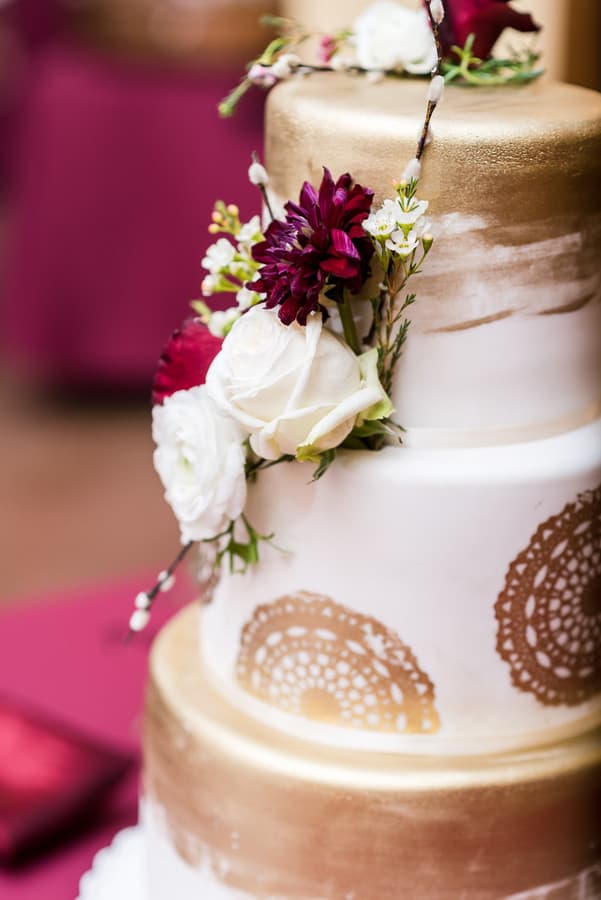
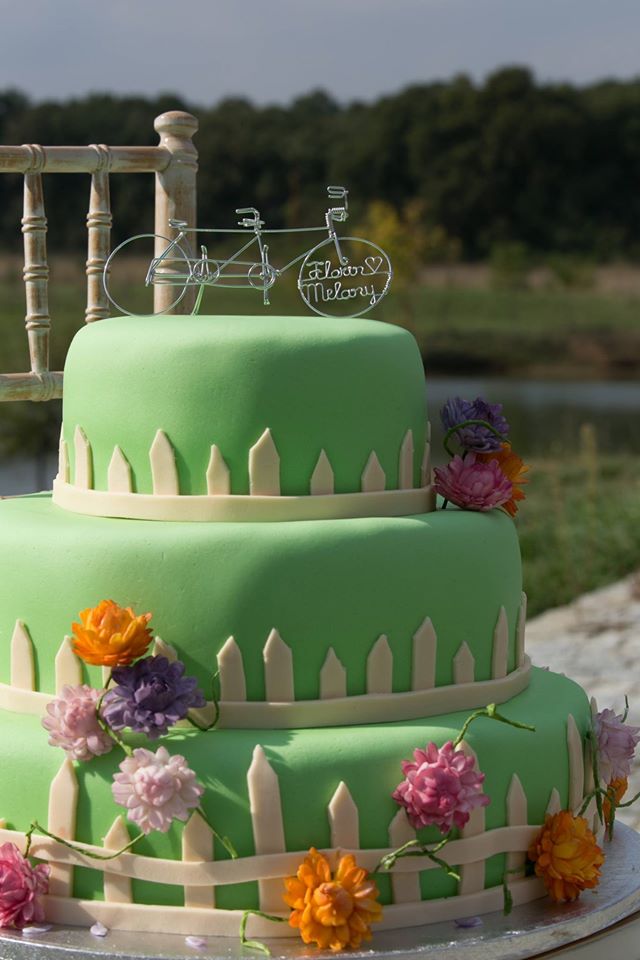
Also known as rolled fondant, this is the smooth, porcelain-looking icing you see on most magazine-worthy wedding cakes. It’s made from sugar, corn syrup, glycerine, and gelatin, rolled into a smooth sheet and draped over the cake for that flawless, almost architectural finish.
The big advantage: fondant is incredibly versatile and handles heat much better than buttercream. If you’re having an outdoor summer wedding, fondant won’t melt or weep. It’s also the best base for detailed decorative work like stenciling, hand-painting, and sharp geometric designs.
The downside? Some people find fondant too sweet or don’t love the slightly chewy texture (this is the polite way of saying some guests will peel it off). It also costs more. Many bakeries upcharge for fondant by a percentage, and that cost climbs with every additional tier.
Buttercream
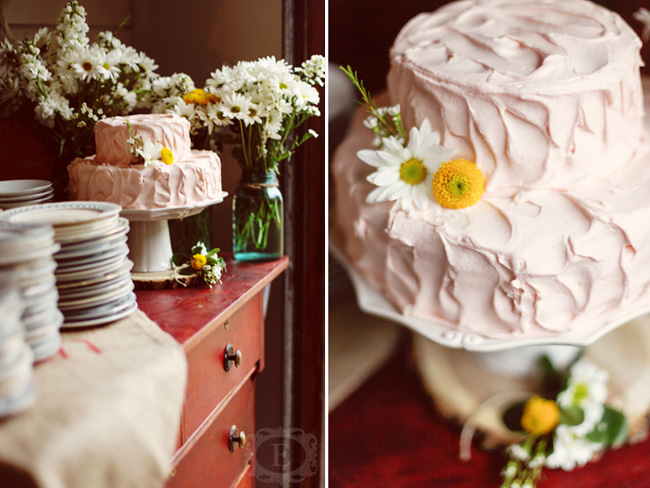
Just as the name implies, this lovely icing is made from butter, cream, sugar, and vanilla (or whatever flavor you’d like to mix in). It’s soft, creamy, spreads easily, and tastes significantly better than fondant. There, we said it.
French buttercream and Swiss meringue buttercream are the top-tier options (pun intended). They’re silkier and less sweet than American buttercream, which can veer into tooth-achingly sugary territory. Your baker should be able to tell you which type they use. Buttercream is perfect for cake designs like rosettes, swags, textured swirls, or basket weave patterns.
The catch: buttercream is temperature-sensitive. Any heat will start to melt the butter, which means buttercream cakes are not the best choice for outdoor weddings in warm weather. If your heart is set on buttercream and your venue is outdoors, have a serious conversation with your baker about timing and a climate-controlled display area. Buttercream is also typically less expensive than fondant, which can save you a meaningful amount on a multi-tier cake.
Royal Icing
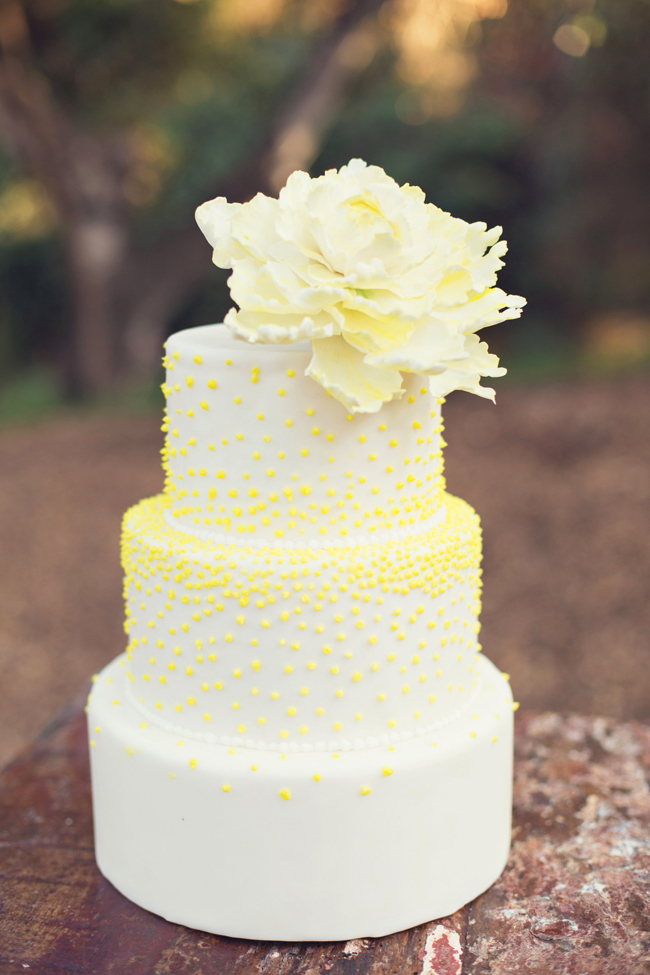
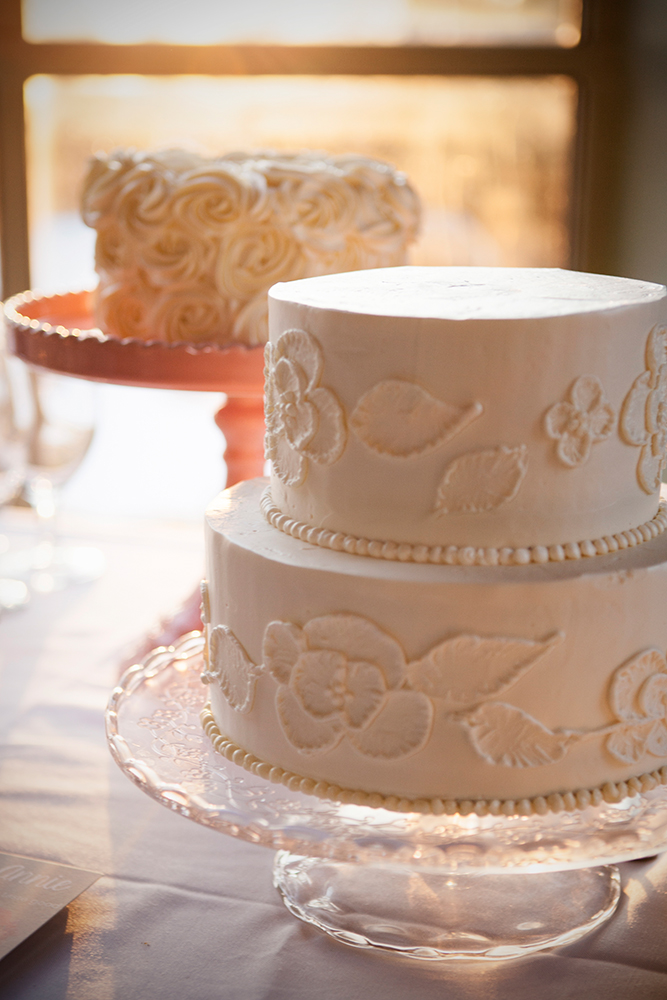
Made from egg whites and confectioner’s sugar, royal icing hardens completely when it’s fully dried. You wouldn’t ice a whole cake in royal icing (it would be like eating a sugar shell), but it’s the go-to for intricate decorating touches: small flowers, piping, polka dots, beading, lattice work, and monograms. Because it dries hard, decorations can be made well in advance and placed on the cake before delivery, which gives bakers more creative flexibility with timing.
Ganache
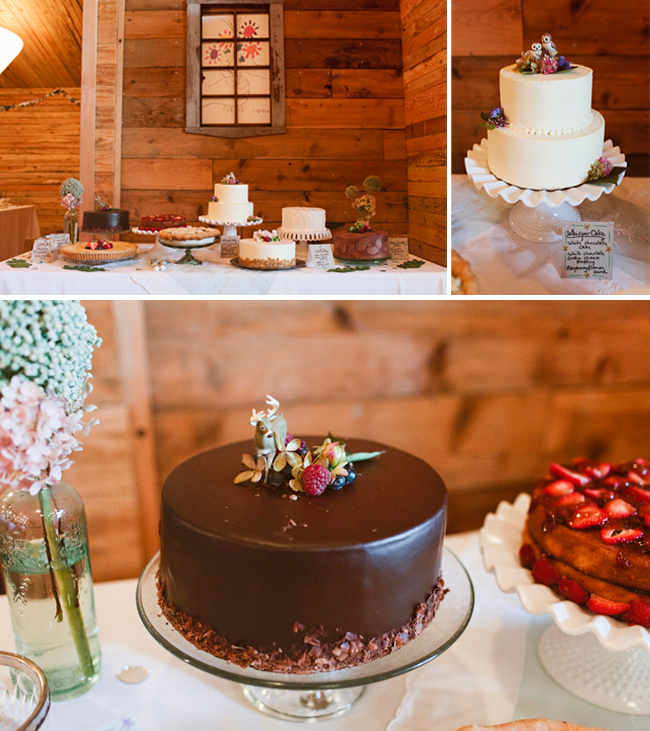
A mixture of cream and chocolate (dark, milk, or white) that creates a rich, glossy, almost mirror-like finish. Ganache is firmer than buttercream and holds up better in warm conditions, while tasting infinitely better than fondant to most palates. White chocolate ganache can be colored and used similarly to fondant for a smooth look, while dark chocolate ganache delivers that signature decadent shine.
Ganache is an underrated option for couples who want a polished look without the fondant texture. The trade-off: it limits your color palette unless you’re using white chocolate, and it can be harder for bakers to achieve the same range of decorative techniques as fondant.
Marzipan
Created from hardened almond paste and sugar, marzipan can be rolled and used as icing similar to fondant. It has a subtle almond flavor that some people love and some people are allergic to (always check with your guests). It’s mainly used to create realistic molded shapes like figurines or flowers, and one advantage is that marzipan can be painted with food coloring afterwards for incredibly lifelike results. In British baking traditions, marzipan is often used as a smooth under-layer beneath royal icing on traditional fruitcakes.

Wedding Cake Alternatives
Not every couple wants a traditional tiered cake, and that’s perfectly fine. There are some clever alternatives that can save you money, simplify logistics, or just feel more “you.” Here are the options worth knowing about.
The Fake (Display) Cake
As the name implies, a fake cake is layers of foam shaped and decorated to look like the real thing. You get the visual drama of a five-tier showstopper, and your guests get pre-cut sheet cake from the kitchen. The couple can still do the ceremonial cake cutting with a small real section tucked into the back of one tier.
One myth worth busting: don’t assume a fake cake plus sheet cake will automatically be cheaper than a real cake. There’s still a lot of skilled work that goes into designing and decorating a display cake. The real bonus is logistics. With pre-cut sheet cake, servers can start delivering slices the minute the cutting ceremony is over, instead of guests waiting while someone carefully portions a five-tier masterpiece in the kitchen.

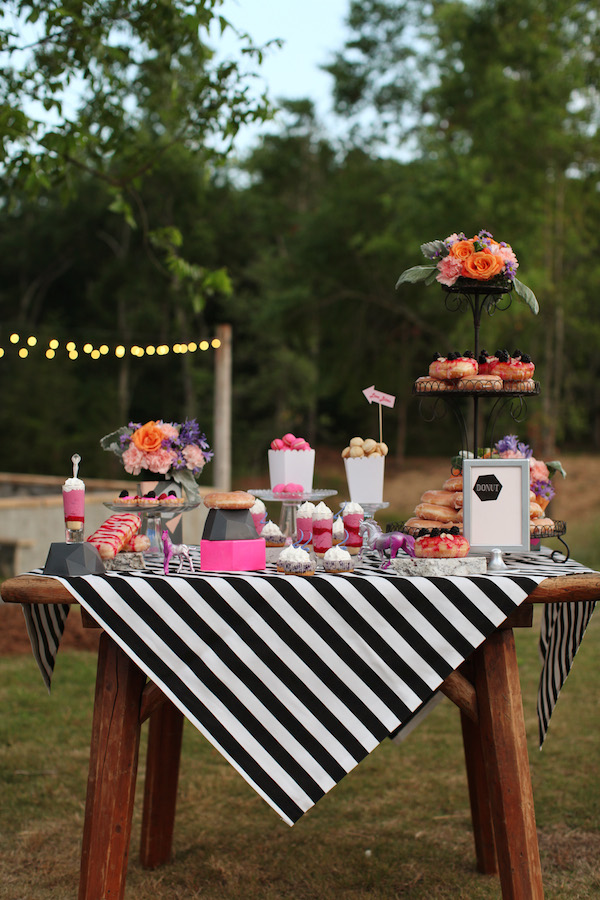
Cupcake Towers and Dessert Tables
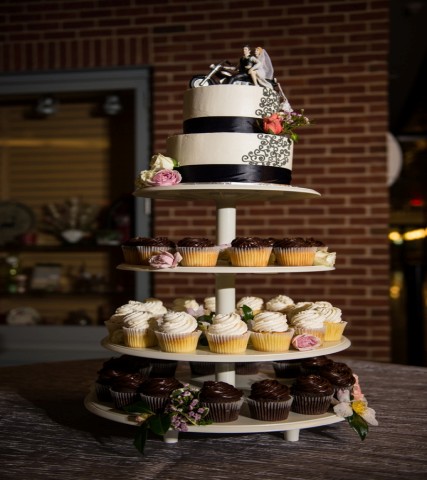
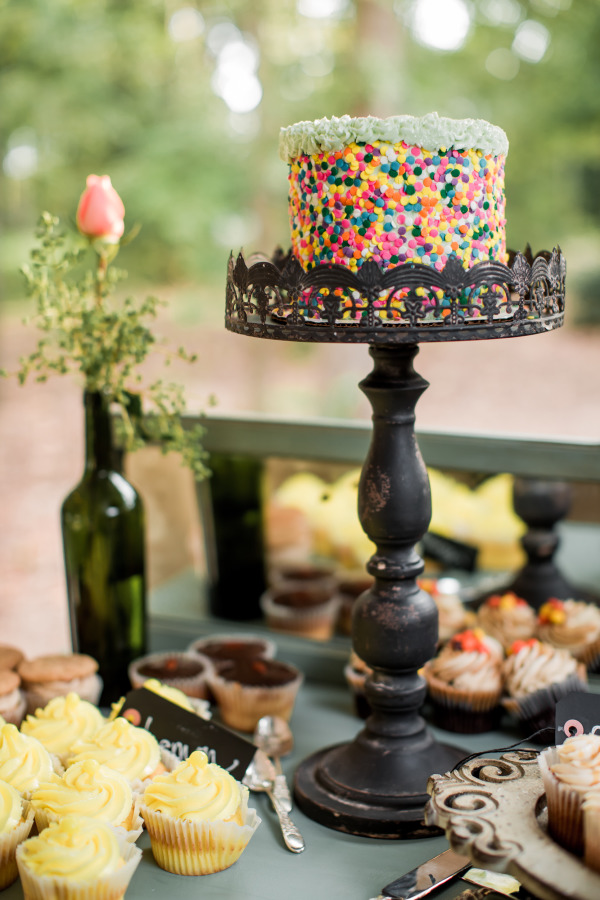
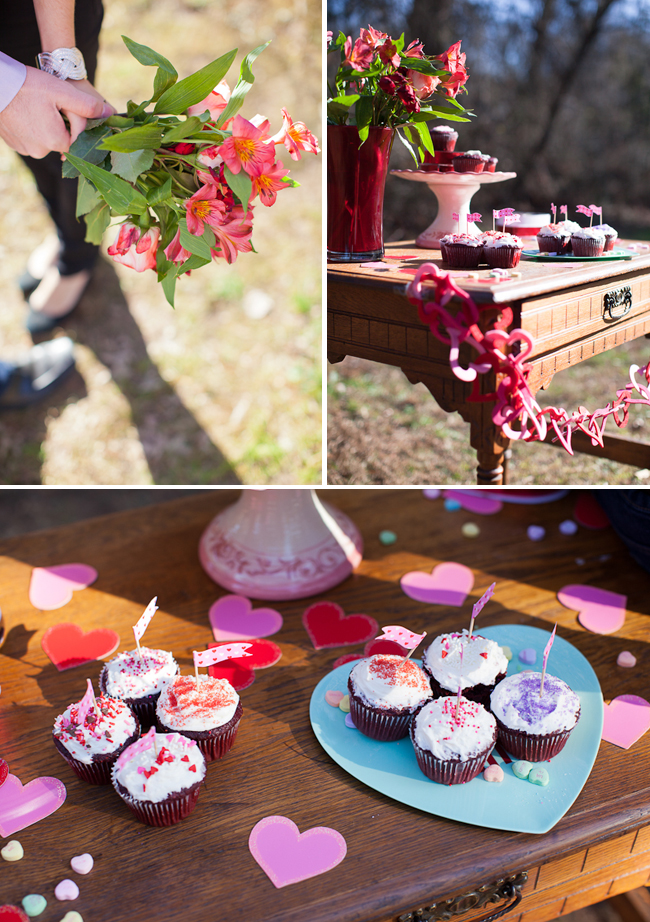
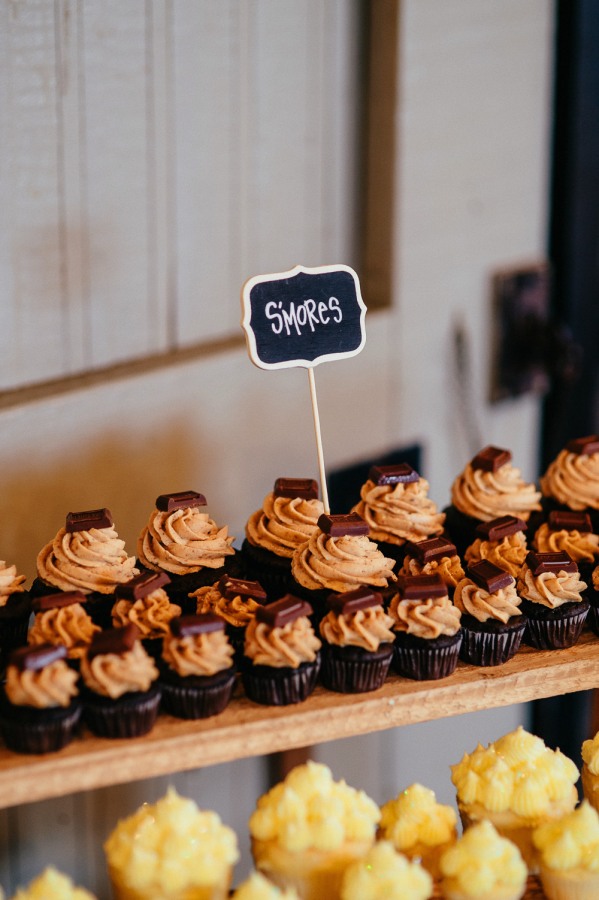
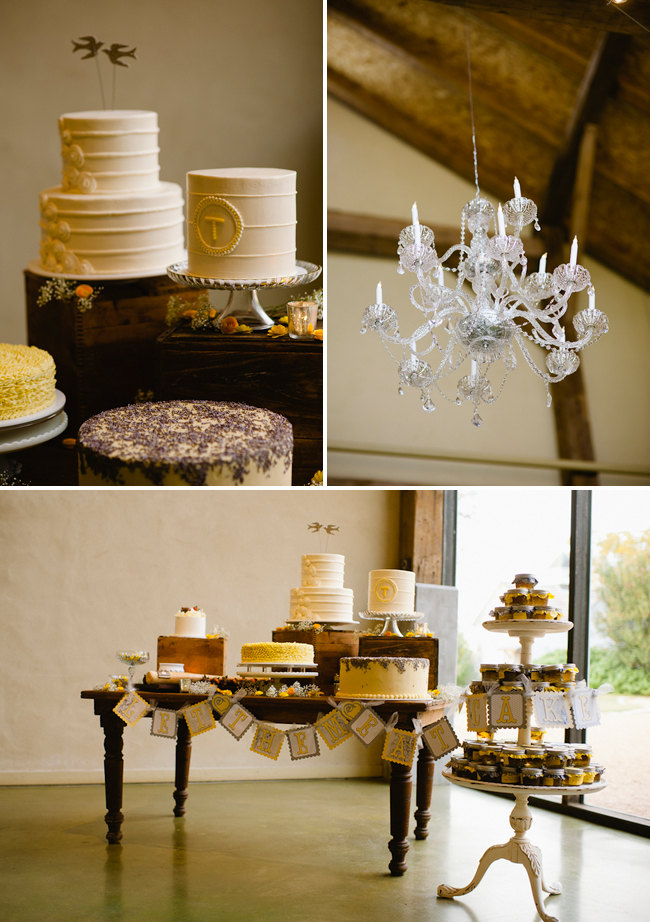
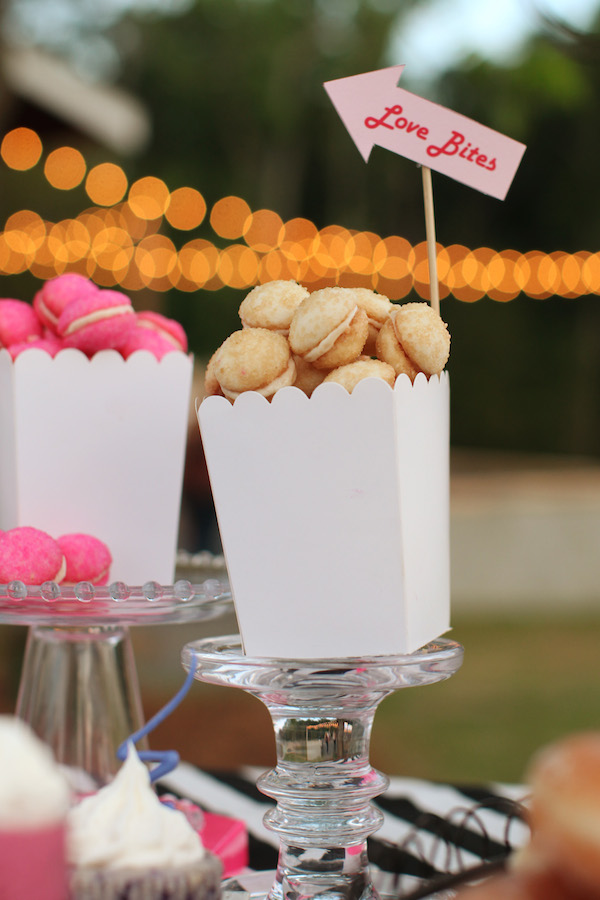
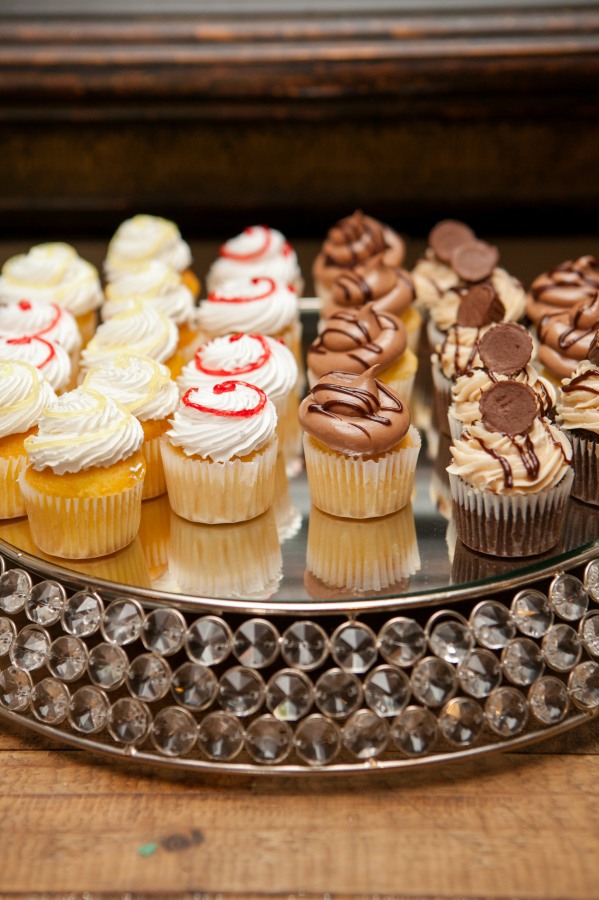
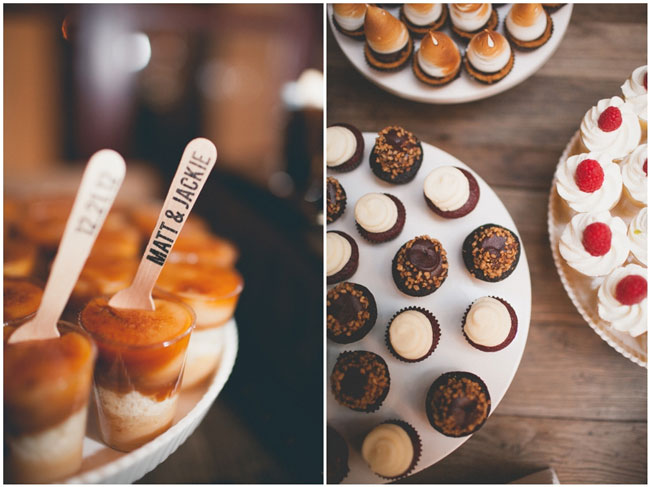
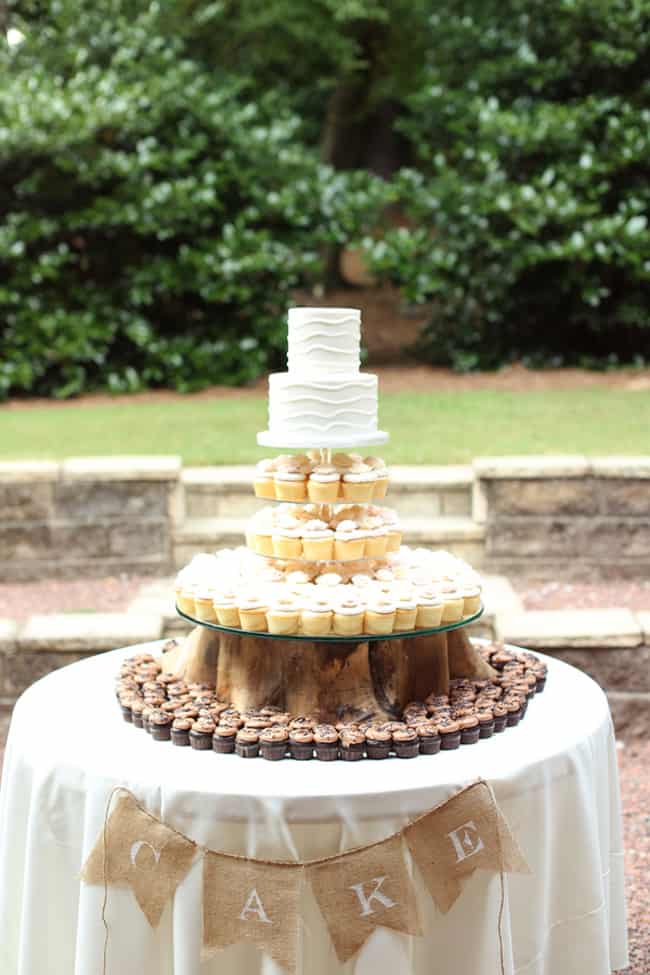
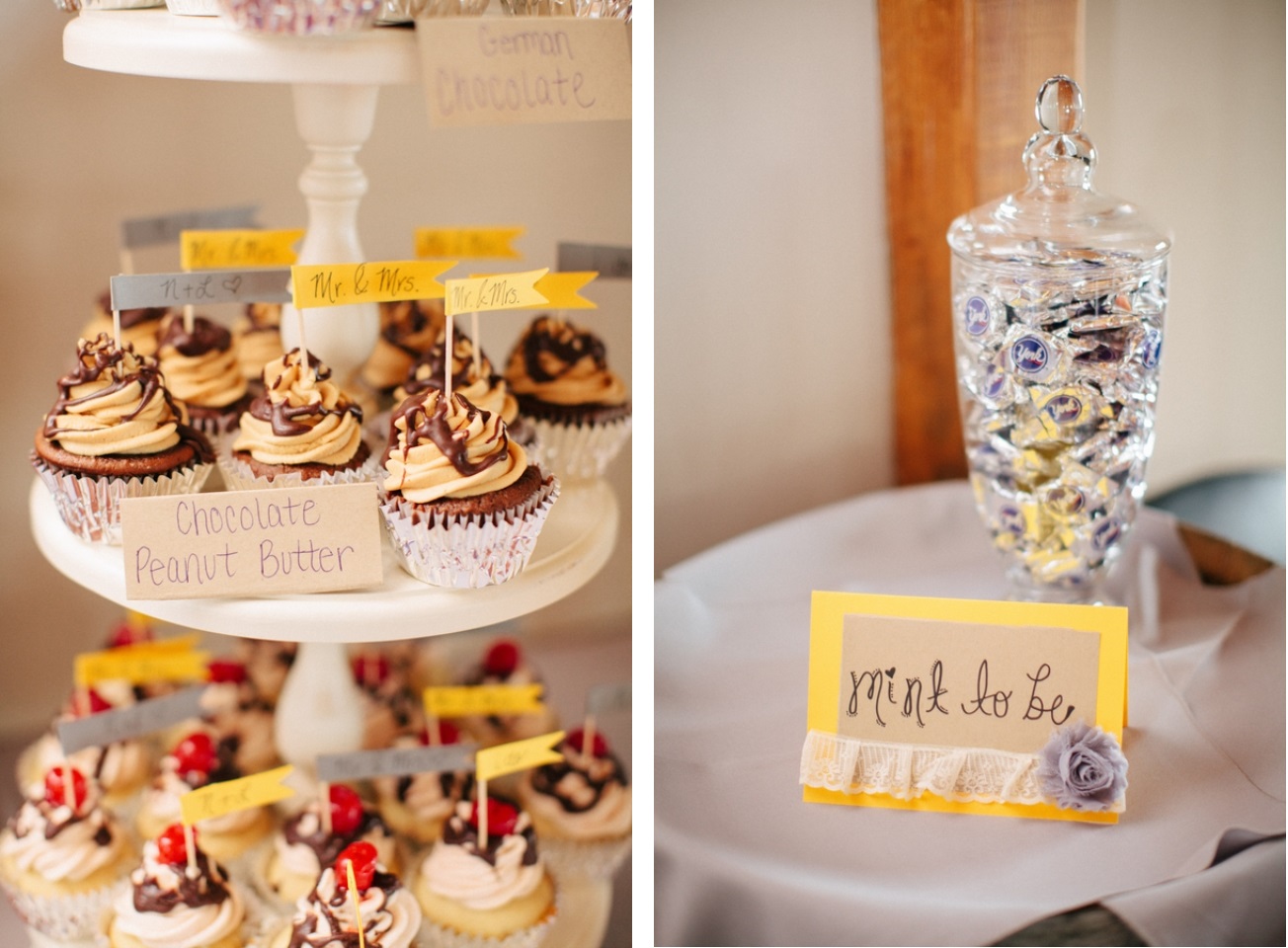
If you love the idea of offering variety, a dessert table lets you pair a small cake with cupcakes, macarons, donuts, cookies, or mini pastries. The cake serves as the centerpiece with smaller treats surrounding it, giving guests options while still having that traditional cake-cutting moment. Cupcake towers give you the visual height and drama of a wedding cake with built-in portion control and flavor variety.
You can still keep a small top tier for the ceremonial cutting (and for those one-year-anniversary freezer traditions). Other fun alternatives we’ve seen include macaron towers, donut walls, pie tables, and even cheese wheel “cakes” for couples who’d rather skip dessert entirely and go straight to the cheese course.
Allergy-Friendly Wedding Cakes
Many couples (or their guests) may be allergic to certain ingredients like nuts, dairy, or gluten. This is more common than most people realize, and it’s worth having the conversation with your baker early. Most experienced wedding cake bakers will be happy to create a tier (or the entire cake) that’s gluten-free, nut-free, or dairy-free. Some can even accommodate multiple allergies without sacrificing taste or design. Just bring it up at the consultation so there are no surprises.
Wedding Cake Shapes
Shape does more than you’d expect. It affects how many servings you get, how the cake looks on the table, and whether it matches the vibe of your reception. We’ve seen some wildly creative cake shapes over the years, and talented bakers know how to mold and manipulate cakes into almost anything you can imagine. Here are the main shapes to consider.
Round
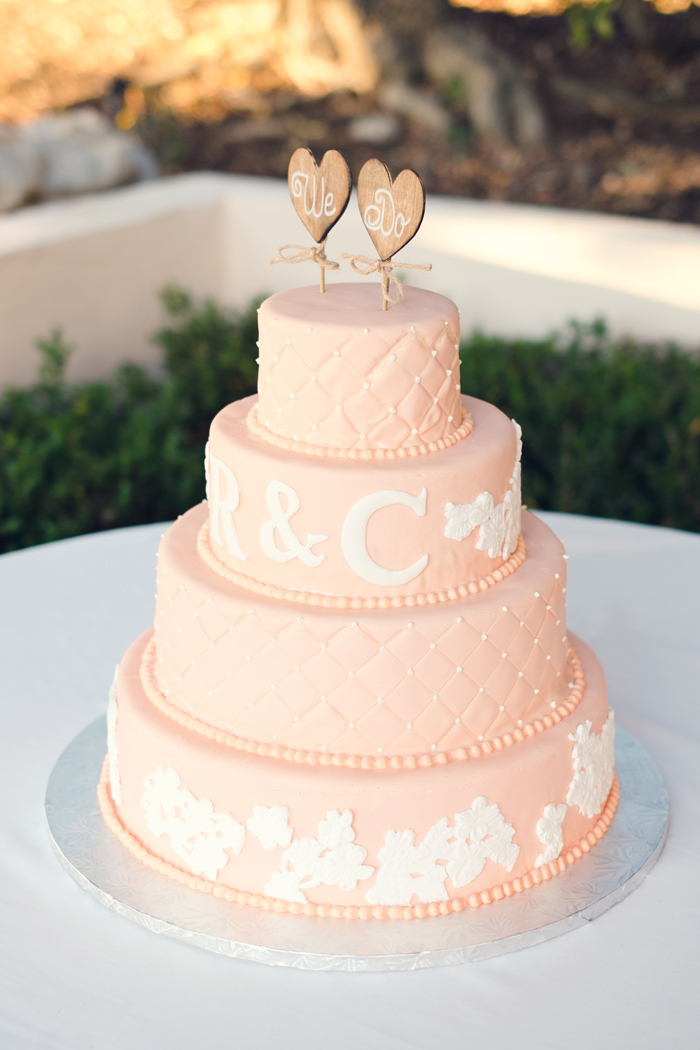
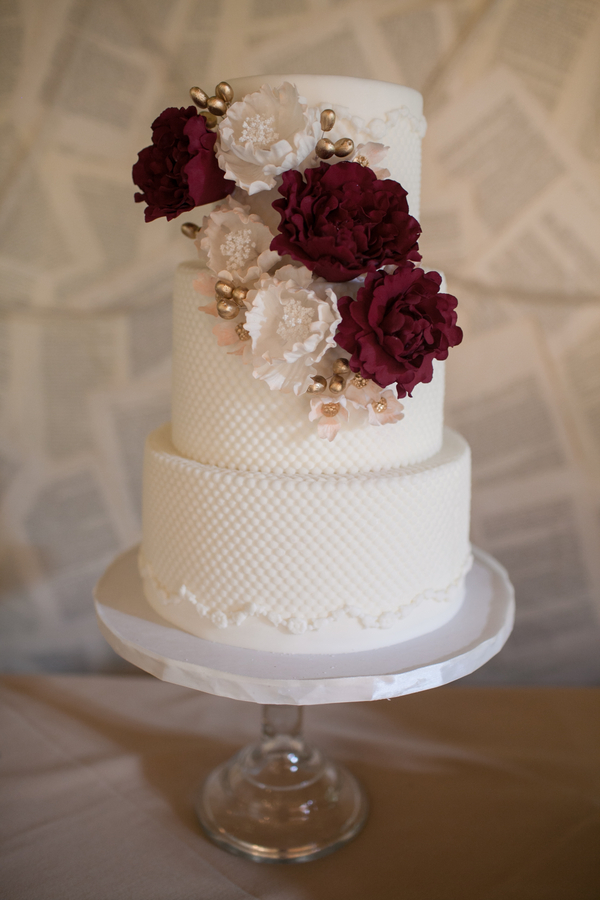
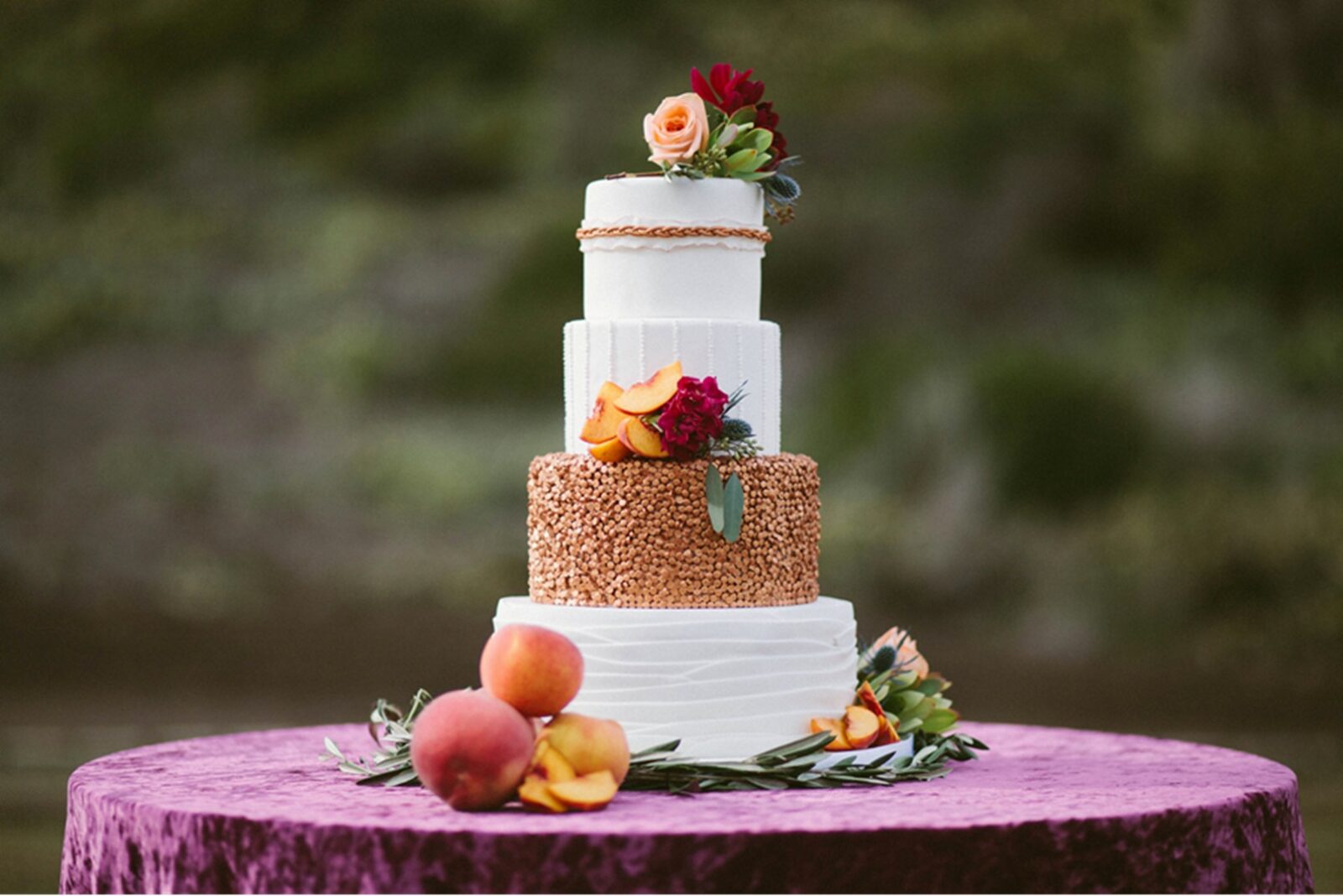
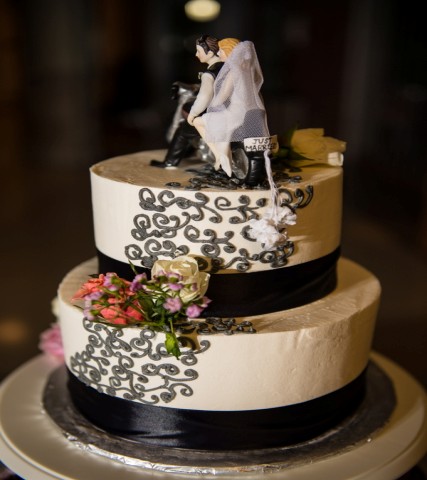
Round is the default for a reason: it works with virtually every style, from traditional to modern. Round tiers stack easily, they’re more forgiving for bakers (no tricky corners), and they look elegant from every angle. If you’re not sure about shape, round is the safe bet that still looks intentional. Most of the cakes you see on Pinterest and in wedding magazines are round, which means you’ll have endless inspiration but may need to work a little harder through decorating choices to make yours stand out.
Square and Rectangular
Square cakes immediately read as more modern and architectural than round ones. The clean edges give designers more surface area to work with for patterns, stenciling, or geometric decorations. Square tiers also yield more servings per tier than round ones of the same width (because of those corners), which is a nice budget bonus.
The trade-off: square cakes require more precision from the baker. Wonky corners are a lot more noticeable than a slightly uneven curve on a round cake. Make sure your baker has experience with angular designs before committing.
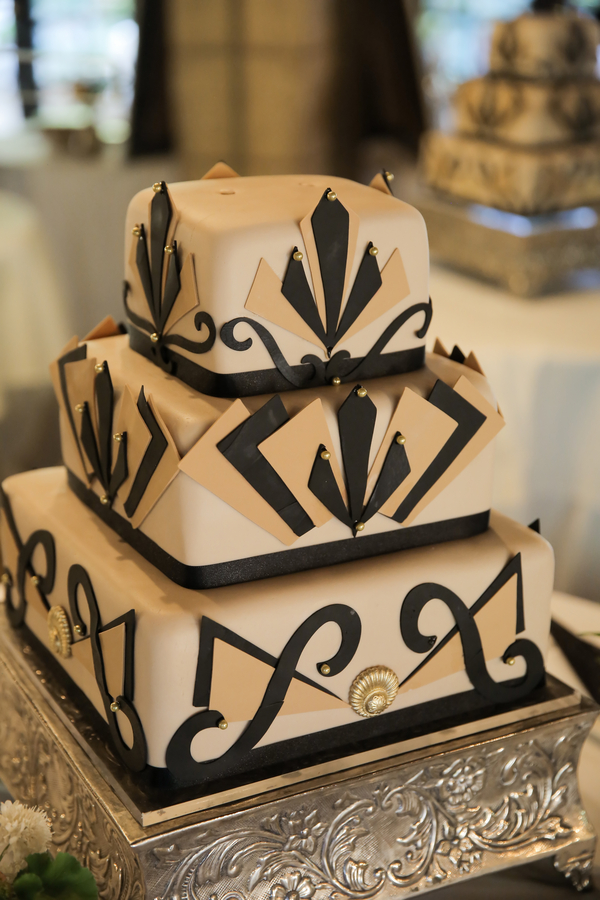
Hexagonal and Geometric
For couples who want something that feels fresh and different without going completely off the rails, hexagonal and other geometric shapes (petal-shaped, octagonal) are a great middle ground. They’re eye-catching enough to photograph well but not so unusual that they’ll confuse your grandparents. Geometric cakes pair especially well with modern or art-deco-inspired weddings, and some bakers combine geometric shapes with metallic accents or sharp fondant lines for a look that’s almost sculptural.

Mixed Shapes
Who says every tier has to match? Mixing shapes within the same cake, like a round tier stacked on a square one, or hexagonal alternating with round, creates visual interest and gives your cake an avant-garde edge without needing elaborate decoration.

A word of caution: mixed shapes require structural know-how. The weight distribution changes with different shapes, so this is one for an experienced baker. And the more shapes you combine, the taller the cake tends to get, so make sure your venue has the ceiling height (and table) to handle it.
Wedding Cake Toppers
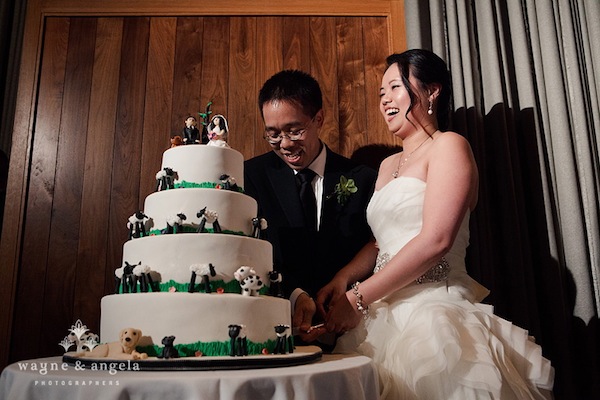
The topper is the finishing touch that personalizes the whole thing. It’s a small detail that photographs big, especially in close-up shots and cake-cutting photos.
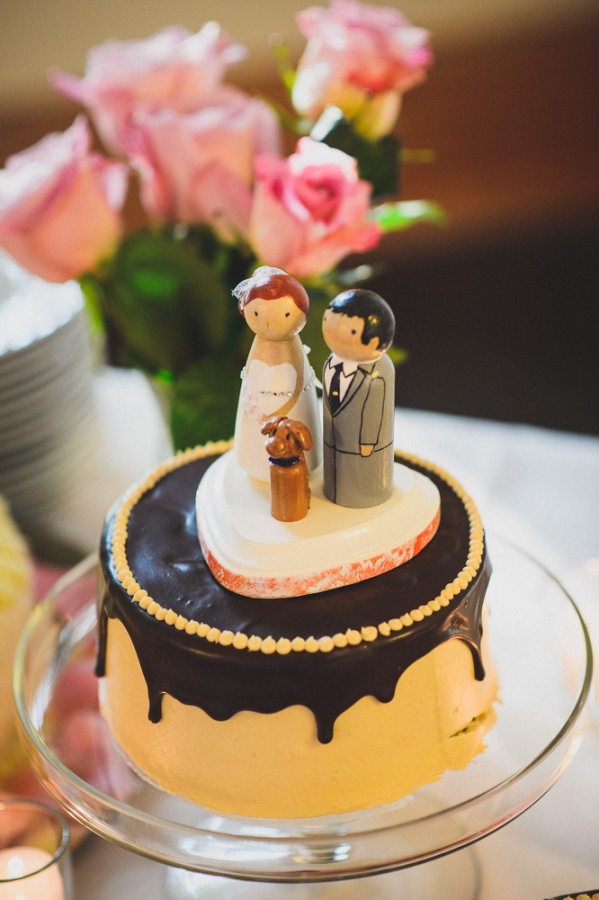
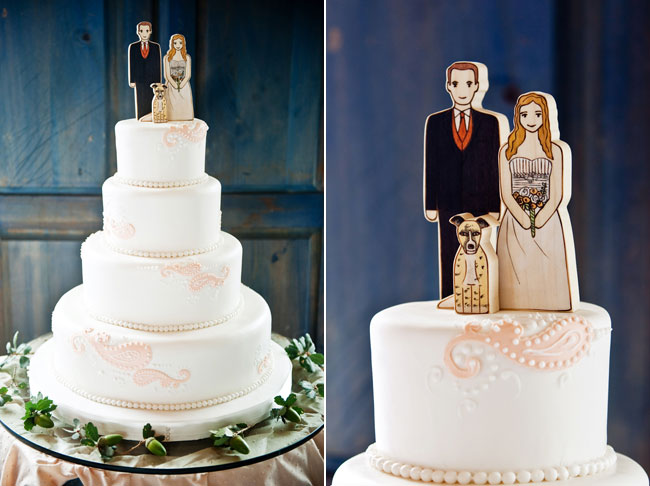
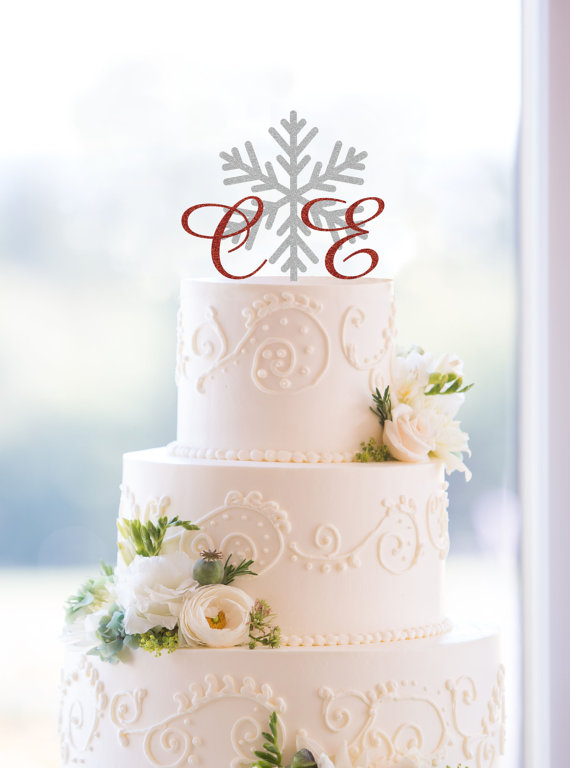
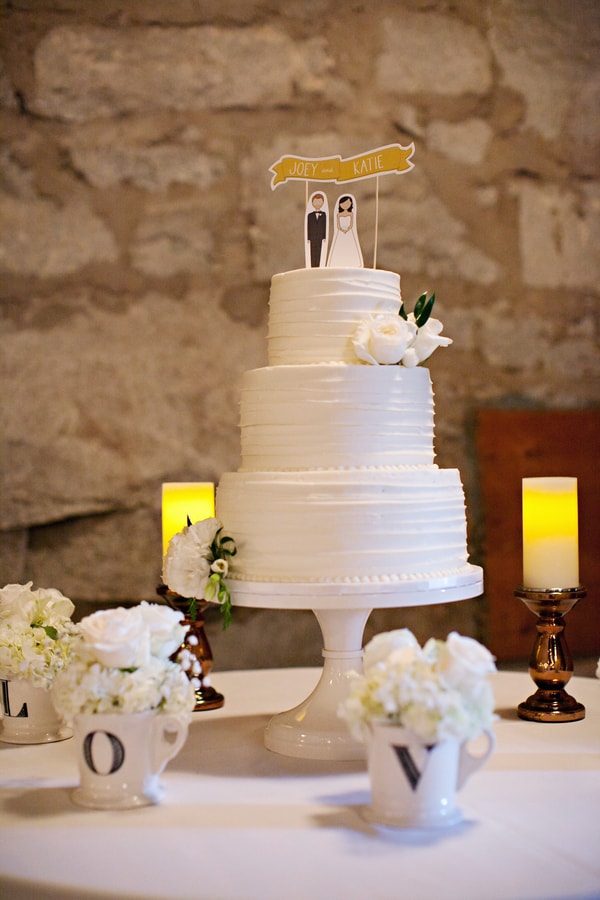
Fresh flowers pulled from your wedding florals are the most versatile option and create a cohesive look instantly. Custom figurines (including ones that feature your pets) add personality and make for great keepsakes after the wedding. Monogram and initial toppers work well for formal or traditional celebrations. Bunting, banners, and laser-cut acrylic toppers lean more casual and fun. And humorous toppers, when done well, tend to get the biggest reaction of the night.
Cake Display and Presentation
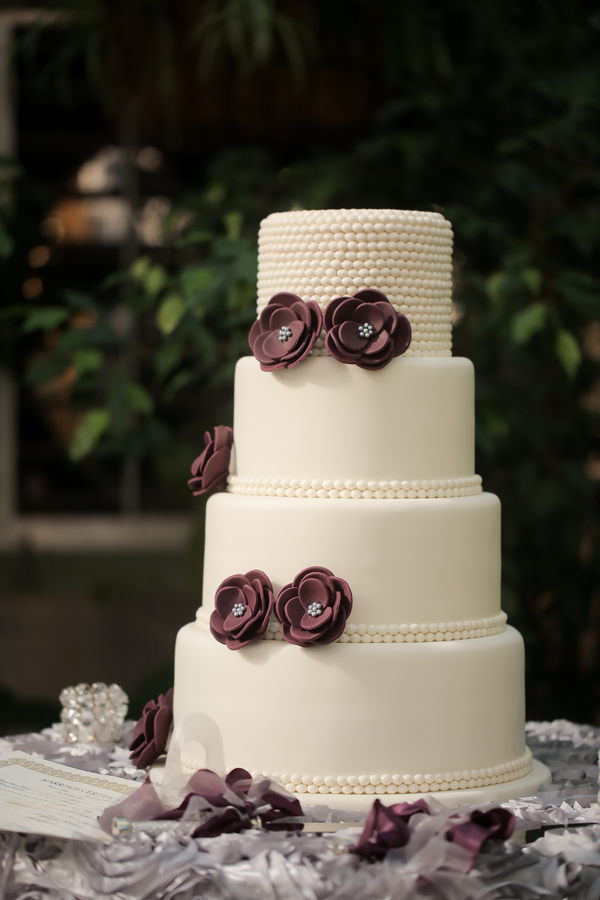
How you display your cake matters almost as much as the cake itself. A gorgeous three-tier can get lost on a cluttered dessert table, and a simple single-tier can look like a showstopper with the right staging. Think about the backdrop, the table, the lighting, and what’s surrounding the cake. A dedicated cake table with intentional styling (linens, florals, candles) creates a clear focal point for photos and for the cake cutting moment.
Wedding Cake Glossary
Walking into a cake consultation is a lot less intimidating when you speak the language. You don’t need to become an expert, but knowing these terms will help you communicate what you want and understand what your baker is suggesting.
Appliqué: A sugar paste design that’s rolled out and applied to fondant icing, similar to appliqué on fabric. Creates a raised, decorative effect without the weight of full 3D elements.
Beading: Small pearl-shaped dots piped around the edges or borders of a cake. It’s a classic finishing touch that adds elegance without being fussy.
Cornelli: A form of piping that creates a squiggly, lace-like pattern with no clear repeat. It looks intricate and detailed from a distance, even though the technique itself is freeform.
Crystallized Flowers: Also called candied flowers. These are real, edible flowers coated in sugar to preserve their color and shape. They add a natural, romantic touch and are genuinely edible (unlike some gum paste alternatives).
Dragée: Small, hard, ball-shaped confections typically coated in metallic colors (silver, gold, pearl). Think of those tiny silver balls you see on fancy cakes. They add sparkle and texture.
Draping: A mixture of gum paste and fondant used to create folds and swags on the cake that mimic the look of draped fabric. It’s a technique that adds movement and softness to an otherwise structured cake.
Genoise: A classic French sponge cake that’s lighter and dryer than typical North American sponge cake. It’s usually layered with fruit fillings and soaked in flavored syrup or liquor to add moisture back in.
Gum Paste: A mixture of gelatin and sugar that dries much harder than fondant. Bakers use it to create intricate, delicate decorations like realistic sugar flowers, seashells, figurines, and leaves. Beautiful to look at, not really meant to be eaten.
Layer vs. Tier: These are not the same thing, and mixing them up with your baker can cause confusion. A layer is a single horizontal section of cake (you might have two or three layers within one tier). A tier is a separate cake section stacked vertically. A three-tier cake with two layers per tier is actually six layers of cake.
Luster Dust: Similar to petal dust but with a metallic or pearlescent finish. This is what gives cakes that shimmer, gold sheen, or subtle sparkle. It can be brushed on dry for a soft glow or mixed with a clear extract and painted on for a more intense metallic effect.
Petal Dust: An edible decorating dust applied with a small brush to add color, shimmer, or depth to icing and gum paste. It’s what makes sugar flowers look lifelike, with natural-looking color gradients on petals and leaves.
Piping: The technique of squeezing icing through a bag with a shaped tip to create 3D designs on the cake. Dots, swirls, lace patterns, writing, borders, and flowers can all be piped. Different tips create different effects.
Sugar Flowers: Handcrafted flowers made from gum paste or fondant, designed to look like real blooms. High-quality sugar flowers can be indistinguishable from fresh ones in photos. They don’t wilt, can be made weeks in advance, and won’t introduce allergens. They’re priced accordingly.
How to Prepare for Your Cake Consultation
All of this information is helpful in theory, but when you’re sitting across from a baker with a flavor menu and a pricing sheet, you need a game plan. Here’s what to think about before you go.
Start with your venue. An outdoor summer wedding needs icing that can handle heat (fondant or ganache over buttercream). A rustic barn calls for a different cake style than a downtown hotel ballroom. Let the setting guide the style, and you’ll narrow your options quickly.
Know your guest count. Cake pricing is usually per serving. If you love the look of a tall, dramatic cake but don’t need that many servings, ask your baker about using dummy (foam) tiers for height, with a smaller cutting cake and sheet cakes served from the kitchen. Your guests won’t know the difference, and your budget will thank you.
Bring visual references, not just words. When you say “simple and elegant,” your baker might picture something completely different than what you have in mind. Bring photos (lots of them) and point out specifically what you like: the texture, the color, the proportions, the decoration style. The more visual you are, the better your result will be.
Ask about delivery and setup. A cake that looks perfect in the bakery can have a very different experience in transit. Ask how the cake will be transported, whether they assemble on-site, and what the backup plan is if something goes wrong. (Things go wrong more often than anyone talks about.)
Wedding Cake Inspiration from the Bride’s Attire
One of our favorite design approaches? When an element of the bride’s attire becomes the basis of the entire cake design. Whether it’s a necklace, the material of the dress, or a detail like covered buttons, a sash, or a brooch, pulling inspiration from your outfit creates a connection between you and the cake that feels intentional and personal. Here are some ideas that show how it works.

Necklace via this post, cake via Real Simple


The Sweet Finish
Your wedding cake should look like it belongs at your wedding, taste like something you’d actually want to eat, and survive the journey from bakery to reception in one piece. Everything beyond that is personal preference, and that’s the fun part.
Whether you go traditional tiered, stripped-back naked, or full metallic glam, the right cake is the one that makes you smile when you see it on that table. And then makes your guests smile when they taste it. That’s the whole job.
Do be sure to give the cake a stage worthy of the effort, and we encourage you to check out our post on Wedding Cake Stands Perfect for Any Style to find the right display for your creation.
Happy cake choosing.
